

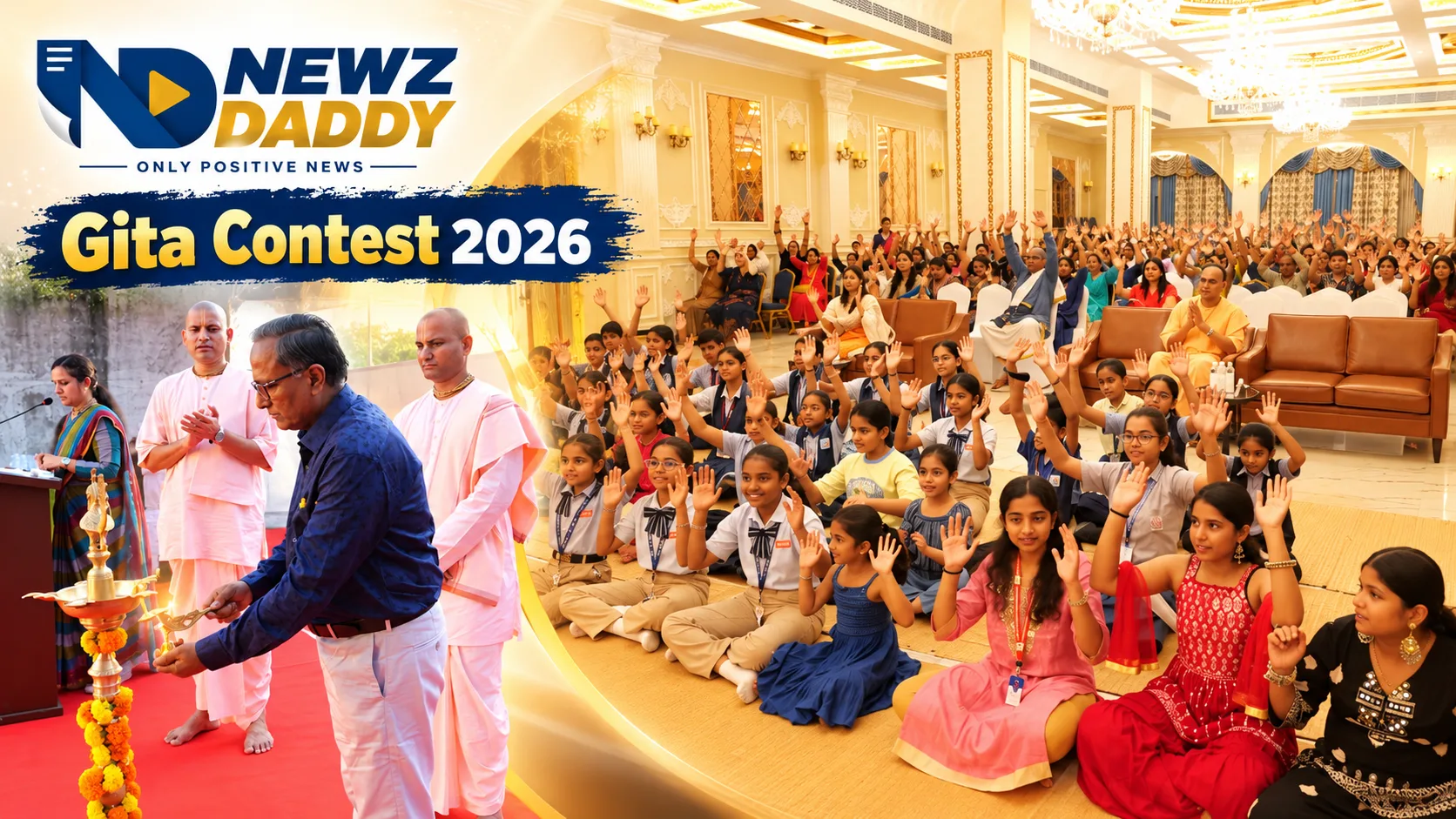
Gita Contest 2026 Draws Students from Schools in Ahmedabad
ISKCON Bhadaj Events Draw Thousands of Students to Indian Culture and Bhagavad Gita
Sanskriti Gurukul’s Sri Krishna Heritage Fest 2026 recorded more than 5,000 registrations from over 40 schools, while its Gita Contest 2026 attracted over 1,000 students, more than 65 teachers and participants from over 15 international schools.
The events were organised by Sanskriti Gurukul, the children’s education and cultural outreach department of ISKCON Bhadaj. The Heritage Fest featured 18 competitions, with 300 winners receiving awards. The Gita Contest focused on the teachings of the Srimad Bhagavad Gita and the lives of important figures in the Vaishnava tradition.
 Both events brought together students, teachers and schools around the study of Indian traditions and religious literature.
Sri Krishna Heritage Fest 2026 attracted registrations from more than 5,000 students representing over 40 schools. Its 18 competitions gave children opportunities to take part in activities related to culture, knowledge and creativity.
The organisers honoured 300 winners at the award ceremony. More than 15 schools received recognition for their continued participation, while over three schools received trophies for their participation and achievements.
Directors of educational institutions, scientists and senior officials of ISKCON Bhadaj attended the prize distribution ceremony. They congratulated the participants and recognised their efforts.
The event placed schoolchildren at the centre of activities linked to Indian cultural traditions. Competitions can give students opportunities to prepare for a subject, test their knowledge and learn to perform before an audience. The press release, however, did not provide a breakdown of the 18 competitions or details of individual winners.
Gita Contest 2026 drew more than 1,000 students, over 65 teachers and participants from more than 15 international schools.
The contest introduced participants to the teachings of the Srimad Bhagavad Gita, Vedic literature and India’s spiritual traditions. Its study topics included the life and teachings of Srila Prabhupada, the message of Lord Sri Krishna and Sri Chaitanya Mahaprabhu, and the stories of Prahlada Maharaja and Dhruva Maharaja.
The programme sought to help students understand the moral lessons found in these texts and stories. Themes such as duty, self-control, devotion and responsible conduct are central to many traditional interpretations of the Bhagavad Gita.
The contest also involved teachers, giving them a role in helping students study the material. The organisers did not disclose the participating schools’ names, the competition format or a list of winners in the announcement.
The two events form part of Sanskriti Gurukul’s wider work with children and families through ISKCON Hare Krishna Mandir Bhadaj in Ahmedabad.
The organisation’s published programme information describes activities such as children’s clubs, culture camps, Gita shloka sessions and value-based learning. Its Kids Club is designed for children aged five to 15 and operates through more than 12 centres in and around Ahmedabad, according to the organisation’s website.
These activities use stories, verses, devotional music and cultural exercises to introduce children to religious texts and customs. The approach gives families and schools another way to teach children about traditions that may not receive much attention during regular classroom lessons.
The programme also raises a wider question about the place of cultural and moral education in schools. Children learn academic subjects, but they also develop ideas about responsibility, relationships and their place in society through their families, teachers and communities.
India’s school education policy recognises the role of cultural knowledge and values in children’s development. The National Curriculum Framework for School Education 2023 includes Indian knowledge traditions where they are relevant and useful. It also discusses the development of children’s intellectual, physical, social and emotional abilities, along with values and spiritual growth.
The framework provides a wider education policy context for initiatives that introduce children to Indian literature and traditions. It does not, however, establish that every school must adopt a particular religious programme.
Sanskriti Gurukul’s two events brought a large number of students into organised cultural and religious learning activities. The registration figures for the Heritage Fest and the Gita Contest suggest interest among participating schools and families, although the announcement does not provide data on attendance, learning outcomes or feedback from students.
Such information would help assess what participants gained from the programmes beyond competition results. It could also show whether students continued reading the texts, practising the verses or applying the lessons after the events.
For now, the reported figures provide a measure of the programmes’ reach. The Heritage Fest involved more than 40 schools, while the Gita Contest included teachers and participants from international schools.
Through its work with schools and teachers, Sanskriti Gurukul plans to continue introducing younger learners to Indian cultural heritage, Vedic literature and spiritual teachings. The long-term value of these efforts will depend on how well children understand what they study and how they use that knowledge in their everyday lives.
Must Read:
Janmashtami: Bhadaj Temple Marks Krishna’s Birth at Midnight