


Ahmedabad Myositis Care Meet Flags Delayed Diagnosis Risks
Ahmedabad Myositis Programme Draws Attention to Delayed Diagnosis and Patient Care
A six-year study of patients with idiopathic inflammatory myositis in Ahmedabad found that 32 of 40 patients, or 80%, reached remission during follow-up. The same study found that patients who reached a rheumatologist more than a year after their symptoms began were more likely to develop long-term disease, need stronger immunosuppressive
medicines and suffer greater accumulated damage.
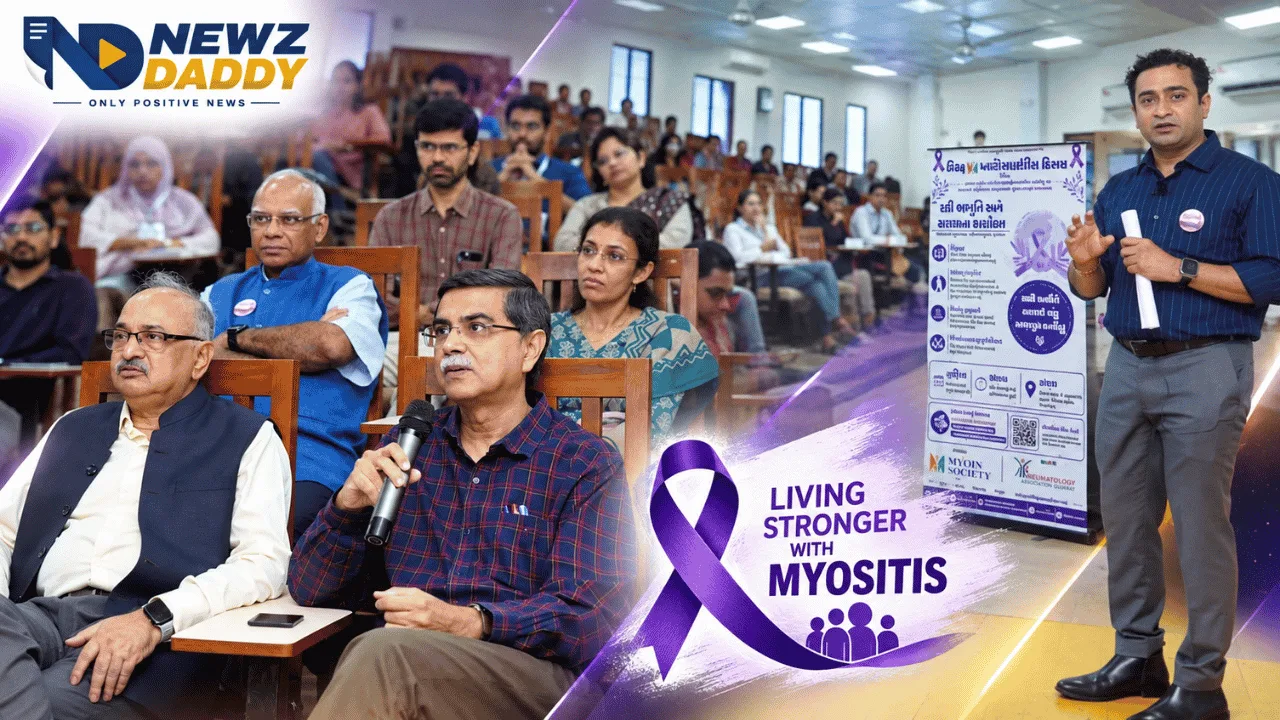
The findings were discussed in Ahmedabad around World Myositis Day on September 21, as doctors, patients and caregivers met at Smt. NHL Municipal Medical College for a patient awareness and support programme on myositis.
The programme was organised by the Rheumatology Association Gujarat, in collaboration with the Myoin Society, with support from Antardhwani. The theme was “Living Stronger with Myositis”.
The Ahmedabad study, published in the International Journal of Rheumatic Diseases, followed 40 patients diagnosed with idiopathic inflammatory myositis between July 2016 and July 2022. Their average follow-up was about 44 months. Thirty-two patients achieved remission, while five died and three continued to have active disease. The researchers also found that 13 patients had disease-related damage by the end of follow-up.
The study gives a more detailed picture behind the 80% figure. Eight patients had remained off corticosteroids and treatment for more than six months. Among patients with a disease duration of more than one year, the risk of a chronic disease course was higher. They were also more likely to need second- or third-line immunosuppressive treatment and had higher damage scores.
Dr Anuj Shukla, Secretary of the Rheumatology Association Gujarat, said, “Early symptoms of myositis can easily be overlooked. Timely evaluation by a rheumatologist is important for early diagnosis and appropriate management, while patient and caregiver awareness can provide much-needed support.”
Myositis refers to a group of rare inflammatory muscle diseases. Idiopathic inflammatory myopathies can cause weakness in the muscles and may also affect the skin, lungs, joints and heart. Some patients can develop difficulty swallowing or breathing problems. The symptoms can differ widely between patients, which can make recognition difficult. A 2023 review in Nature Reviews Rheumatology estimated the prevalence of idiopathic inflammatory myopathies at between 2 and 25 cases per 100,000 people, with an incidence of 0.2 to 2 cases per 100,000 person-years.
Common symptoms include trouble climbing stairs, getting up from a chair, lifting the arms and carrying out routine physical activities. Persistent muscle weakness and fatigue may be mistaken for ageing, poor fitness or other health problems. The condition can also involve organs outside the muscles, which is one reason doctors may need information from several medical specialities.
Dr Vishnu Sharma, President of the Rheumatology Association Gujarat, said, “Myositis can affect multiple organs, making coordinated care important. Greater awareness can help reduce diagnostic delays and support comprehensive treatment.”
The meeting also formed part of a wider effort by the Myoin Society to build knowledge about inflammatory muscle diseases in India. The society was established in 2021 and works with rheumatologists, clinical immunologists and specialists from other fields. Its work includes research, medical education and patient support.
Myoin Society also held its Third National Myositis Meet in Ahmedabad on September 19 and 20, 2026, at Smt. NHL Municipal Medical College. The meeting brought together doctors, researchers, patients and caregivers and included workshops on myopathology and functional assessment in myositis.
Indian research has also shown that myositis does not follow one single pattern. A study of 250 patients in the MyoCite cohort found that dermatomyositis was the most common form in the group, followed by overlap myositis. Myositis-specific and myositis-associated antibodies were detected in 59.2% of the patients tested.
Another Indian study involving 103 patients with antibody-positive idiopathic inflammatory myopathies found differences in clinical and laboratory features between antibody groups. Interstitial lung disease was found in 27.5% of patients who underwent chest CT scans, while three patients had an underlying cancer at the time their myositis was diagnosed.
These findings help explain why doctors stress regular follow-up. Myositis can change over time, and the problems faced by one patient may be different from those faced by another. Treatment may involve medicines that control the immune system, along with physiotherapy, exercise suited to the patient’s condition, nutrition advice and monitoring for complications.
Dr Vineeta Shobha, Rheumatologist, said, “Myositis can vary significantly between patients. Regular monitoring, appropriate treatment and attention to complications such as lung and swallowing involvement are essential for long-term care.”
The Ahmedabad programme included discussions on early warning signs, medicines, safe exercise, nutrition, fatigue and pain management, as well as lung and swallowing problems. Patients and caregivers were also able to speak with specialists during an open-house session.
Dr Ram Nath Misra, Rheumatologist, said, “Patient education is an important part of myositis care. Understanding the condition, treatment and rehabilitation can help patients and families manage the journey with greater confidence.”
World Myositis Day is observed each year on September 21. International myositis organisations formally adopted the worldwide observance in 2023, building on earlier awareness efforts in the United States. The date has since become an annual opportunity to draw attention to the disease and the needs of patients and families.
For patients, the Ahmedabad study carries a practical message. The 80% remission rate was recorded in a specific group of 40 patients and should not be treated as a guarantee for every person with myositis. The study does, however, provide local evidence that earlier specialist assessment was associated with better disease outcomes and less accumulated damage.
As awareness programmes bring patients, families and specialists into the same discussion, the focus remains on recognising muscle weakness early and getting the right medical assessment before lasting damage develops.
Must Read:
SCS 2026 Debates AI and Robotic Heart Surgery Future
Heart Transplant Care Gets Boost as EPIC Joins MGM Healthcare