


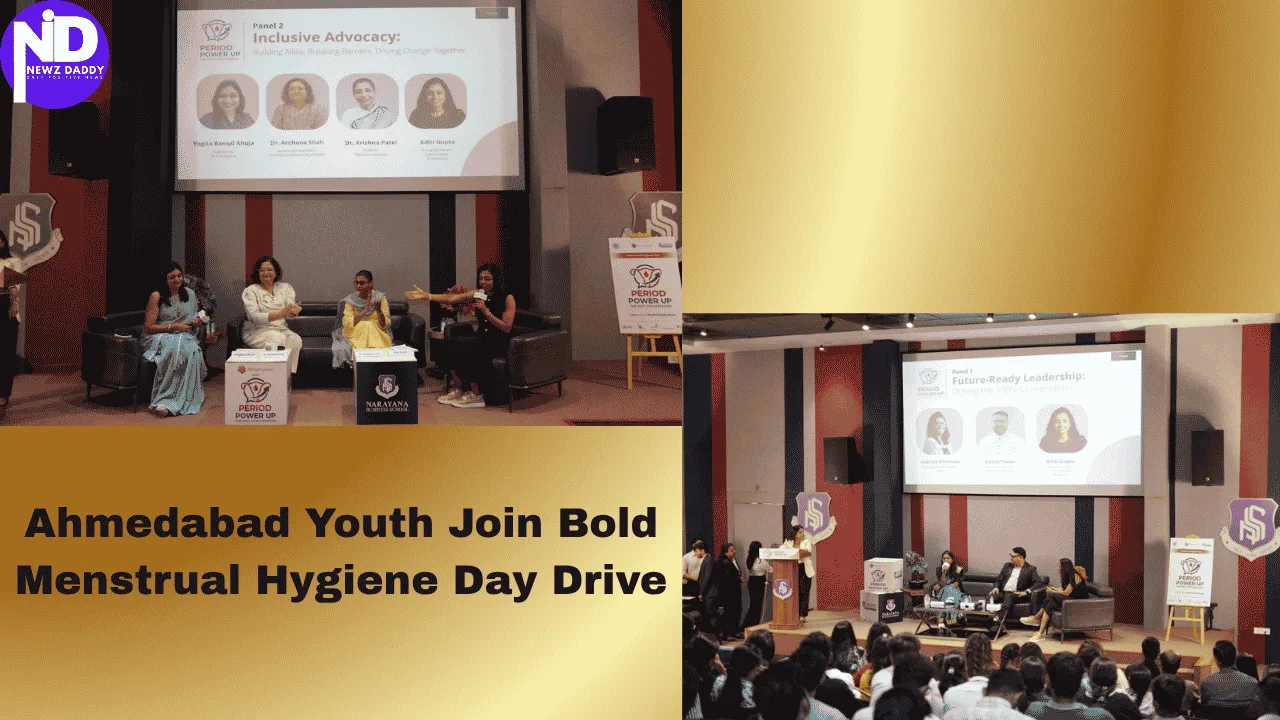
Ahmedabad Youth Join Bold Menstrual Hygiene Day Drive
Narayana Business School Hosts “Period Power Up – The 100% Conversation” on Menstrual Hygiene Day 2026
Narayana Business School (NBS), Ahmedabad, organised “Period Power Up – The 100% Conversation” on the occasion of Menstrual Hygiene Day 2026, reinforcing the importance of menstrual health awareness, inclusivity, and open dialogue in educational and professional spaces.
The event was organised in collaboration with Menstrupedia, Stayfree India, CII Indian Women Network (IWN) Gujarat, Tresna Foundation, Sannidhya Maternity & Multispeciality Hospital, PhilComm, SomComm, and the Women Development Cell of NBS. Bringing together industry leaders, healthcare experts, social advocates, students, and alumni, the initiative aimed to normalise conversations around menstrual health and promote a more empathetic and period-friendly society.
Across India, awareness around menstrual hygiene has improved in recent years, but many girls and women still face silence, shame, and a lack of information. According to reports shared by UNICEF and several public health organisations, many girls in rural and urban areas miss school during their periods because of poor access to sanitary products, fear of embarrassment, or lack of proper toilets. Experts have often said that open conversations in schools and colleges can help young people feel safe, informed, and respected.
The programme featured insightful keynote sessions, panel discussions, student engagement activities, and interactive conversations focused on breaking societal taboos and encouraging inclusive leadership. Distinguished speakers included Ms Supriya Srinivasa (Stayfree India), Ms Aditi Gupta (Founder, Menstrupedia), Ms Yogita Bansal Ahuja (Chairperson, CII IWN Gujarat), Dr Archana Shah (Director, Sannidhya Multispeciality Hospital), Dr Krishna Patel (Founder, Tresna Foundation), and Mr Vishal Tiwari, Vice President – Growth & Strategy, Narayana Business School.
Menstrual Hygiene Day is observed globally on 28 May every year. Health groups and women’s organisations use this day to spread awareness about periods, hygiene, and equal access to healthcare. In recent years, social media campaigns and youth-led movements have played a major role in changing attitudes. Many schools, colleges, and workplaces are now encouraging discussions around period leave, hygiene support, and women’s health needs.
One of the key voices at the event was Ms Aditi Gupta, founder of Menstrupedia, a platform known for using comics and simple storytelling to educate children and teenagers about periods. Her work has reached thousands of schools in India and abroad. Menstrupedia has often been praised by educators for making menstrual education easier to understand for both girls and boys. Studies published in health journals have shown that early education about menstruation can reduce fear and confusion among young girls.
Healthcare professionals at the event also stressed the need for proper menstrual care and emotional support. Doctors have repeatedly warned that poor menstrual hygiene can increase the risk of infections and health problems. Medical experts also say that many young girls hesitate to seek help because they fear judgment from family members or society. By creating safe and respectful spaces for discussion, educational institutions can help students become more confident and informed.
Dr Purvi Gupta, Dean, and Dr Amit Gupta, Director, Narayana Business School, emphasised the institution’s commitment to creating socially aware and emotionally intelligent future leaders through meaningful industry-academia-community collaborations.
Educational experts across India have been encouraging colleges to focus not only on academic growth but also on social awareness and emotional intelligence. Industry leaders today often look for professionals who can work with empathy, respect diversity, and create inclusive workplaces. Events such as “Period Power Up – The 100% Conversation” are increasingly being seen as important steps towards building responsible leadership among students.
Adding a unique dimension to the initiative, a special social media challenge encouraged males to actively participate in conversations around menstrual health, fostering inclusivity and perspective-building among young leaders and society.
This effort reflected a growing global movement where men and boys are being encouraged to become part of conversations about women’s health. Campaigners have long argued that periods should not be treated as a “women-only topic”. Social researchers believe that when boys and men are educated about menstruation, it can help reduce teasing, stigma, and misinformation in schools, homes, and workplaces. Many social campaigns in India have also shown that male participation can create more supportive communities.
Several companies and organisations have also started period awareness campaigns in workplaces. Some businesses now provide sanitary products in office washrooms and conduct wellness sessions for employees. Experts say such steps can improve confidence, productivity, and workplace equality.
The event concluded with a collective message of awareness, dignity, empathy, and the need to make menstrual health conversations a normalised and integral part of society.
As conversations around menstrual health continue to grow across India, initiatives such as this are helping young people speak openly, learn responsibly, and support one another without fear or shame. With educational institutions, healthcare experts, businesses, and social organisations coming together, awareness around menstrual health is slowly moving from silence to acceptance. Many believe that such discussions are no longer optional but necessary for building a healthier and more equal society.
Must Read:
Advanced Laparoscopy Training Inspires Surgeons in Ahmedabad