


AI Monitoring Warns Doctors Before Cardiac Emergencies Strike
AI Monitoring System Helps Marengo CIMS Detect Cardiac Risks Earlier, Hospital Says
Ahmedabad’s Marengo CIMS Hospital has introduced a round-the-clock artificial intelligence-based remote patient monitoring system for people with serious heart and other high-risk medical conditions. The hospital says the technology allows doctors to identify warning signs of health deterioration before they become medical emergencies, both inside the hospital and after patients return home.
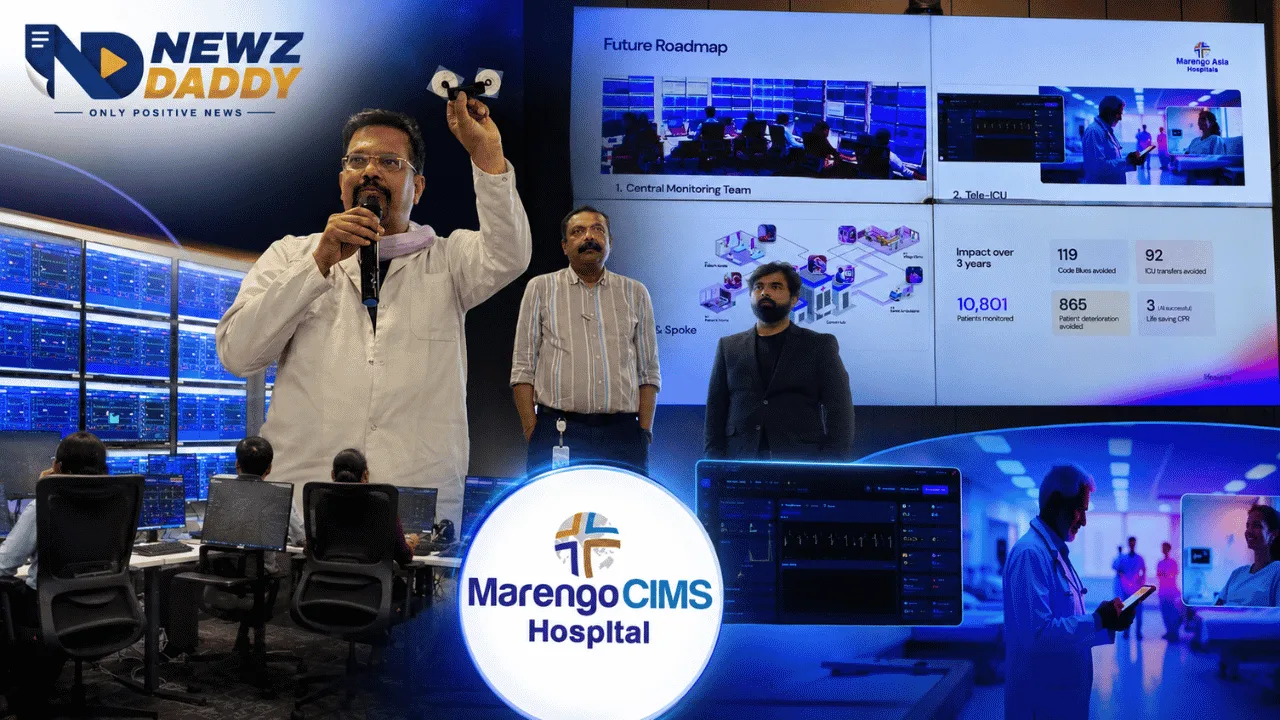
According to the hospital, the system has been in use for more than two and a half years. During that period, it has monitored 6,551 high-risk patients. Hospital data states that the platform helped prevent 836 cases of patient deterioration, avoided 115 Code Blue emergencies, prevented 81 intensive care unit transfers and supported three successful life-saving cardiopulmonary resuscitation (CPR) interventions.

Remote patient monitoring has become an increasingly important part of modern healthcare. Hospitals around the world are using wearable sensors, cloud-based systems and artificial intelligence to keep track of patients with chronic illnesses, especially heart disease, respiratory disorders and other conditions that require regular observation. Medical researchers say such systems can improve patient safety by identifying changes in vital signs early, although doctors remain responsible for clinical decisions.
Marengo CIMS says it is the first hospital in Gujarat to introduce a continuous AI-driven monitoring ecosystem that operates 24 hours a day and follows patients across different stages of care. The system begins monitoring in the ambulance or emergency department, continues in intensive care units and hospital wards, and remains active after discharge when patients recover at home or travel.
The monitoring platform relies on wearable biosensors that record heart rate, blood pressure, respiratory rate, oxygen saturation and other physiological measurements in real time. Artificial intelligence analyses these readings continuously. If it detects patterns linked to worsening health, alerts are sent to the patient’s smartphone, the treating doctor and the hospital’s dedicated Central Monitoring Command Centre.
Doctors then review the information and decide whether medical attention is needed before the patient’s condition becomes critical. The approach reflects a growing shift in healthcare from reacting to emergencies towards identifying patients who may be at higher risk before serious complications develop. (arXiv)
Heart disease remains one of India’s leading causes of death. Conditions such as heart failure and cardiac rhythm disorders often worsen gradually before patients notice obvious symptoms. Continuous monitoring may help identify these changes earlier than routine hospital visits, particularly for patients recovering after treatment or living with long-term cardiovascular disease.
Speaking about the programme, Dr Dhiren Shah, Director, CVTS & Heart Transplant Programme, Marengo CIMS Hospital, said:
“Marengo CIMS Hospitals has been using this AI enabled biosensor technology for more than two and a half years for patients at high risk of cardiac and other life threatening conditions. During this period, the hospital has monitored over 6,551 patients, successfully prevented 836 cases of patient deterioration, avoided 115 Code Blue emergencies, prevented 81 ICU transfers, and facilitated three successful life saving CPR interventions, demonstrating the significant impact of AI assisted continuous monitoring on patient outcomes.”
The hospital says the technology is particularly useful for people with heart failure, reduced heart function, cardiovascular disease, stroke risk, asthma and other long-term illnesses that require close observation. Unlike conventional bedside monitoring, the wearable system allows doctors to continue receiving clinical information after patients leave the hospital.
A dedicated AI Monitoring Command Centre has also been established at Marengo CIMS. Trained clinical teams review alerts around the clock and communicate with treating doctors whenever intervention may be required. Hospital officials say this process can reduce emergency admissions and improve patient safety by recognising deterioration before symptoms become obvious.
Mayur Dave, Facility Director, Marengo CIMS Hospital, added:
“Most serious cardiac emergencies do not occur suddenly. The human body gives subtle physiological signals hours or even days before a critical event such as heart failure. Our AI powered monitoring ecosystem enables us to identify these warning signs at the earliest stage, allowing doctors to intervene before the patient’s condition becomes critical. Over the past two and a half years, this technology has helped us prevent 115 Code Blue emergencies while continuously monitoring thousands of high risk patients. This is not just remote monitoring, it is predictive, preventive and personalised healthcare powered by artificial intelligence. We believe this technology will redefine how critical care is delivered in Gujarat.”
The artificial intelligence platform used at the hospital is provided by Lifesigns, a company that develops patient monitoring and clinical intelligence technology for hospitals. According to the company, its platform combines continuous monitoring with predictive risk assessment, automated clinical documentation and decision support by analysing live vital signs alongside laboratory results, clinical notes, reports and patient history.
Artificial intelligence is increasingly being introduced into healthcare worldwide, but experts note that these systems are designed to assist rather than replace clinicians. Research has shown that AI-based remote monitoring can improve the early detection of patient deterioration, although successful use depends on accurate data, careful clinical oversight and integration into hospital workflows.
Marengo CIMS Hospital has built its reputation around advanced cardiac and transplant care. The Ahmedabad-based hospital has previously introduced several specialised cardiac services, including Gujarat’s first successful heart transplant and a range of minimally invasive structural heart procedures, according to information published by the hospital.
As hospitals continue to adopt digital health tools, technologies that combine wearable sensors with artificial intelligence are expected to play a larger role in managing patients with chronic diseases. Their long-term impact will depend on clinical evidence, patient acceptance, regulatory oversight and how effectively healthcare teams use the information they provide.