


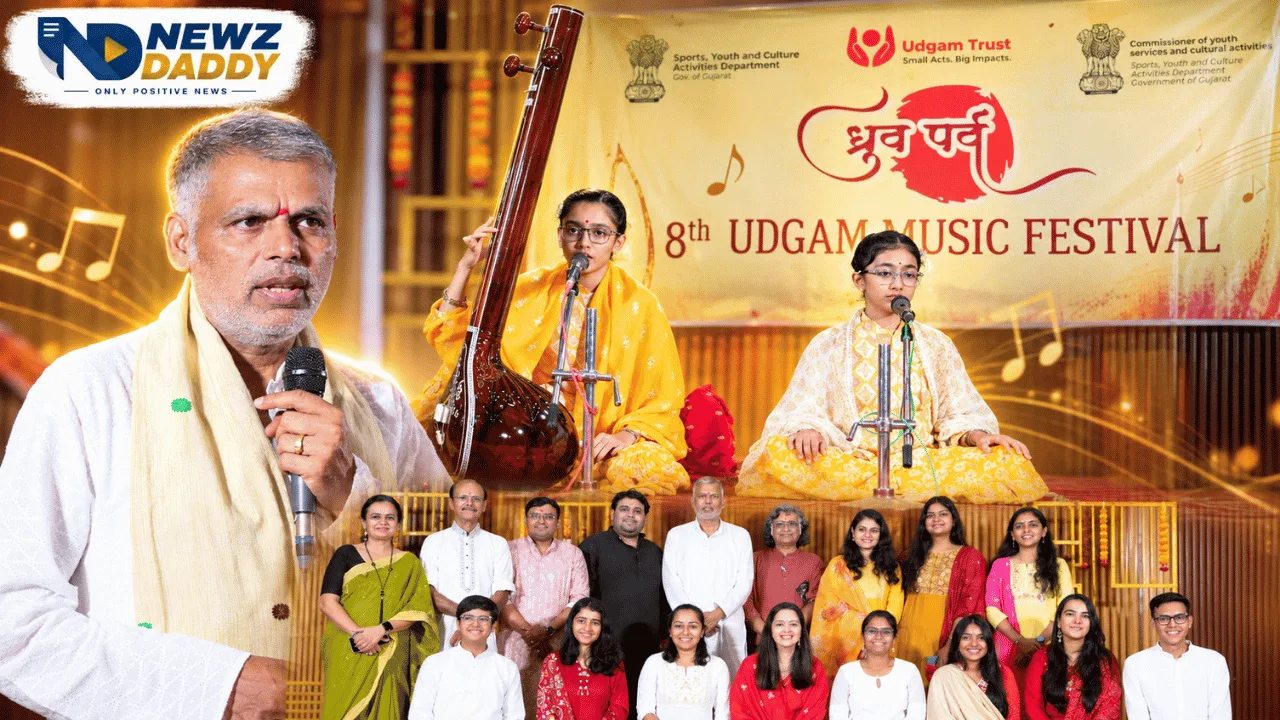
Dhruv Parva Ends After Three Days of Music in Gandhinagar
Dhruv Parva Brings Three Days of Classical Music and Dance to Gandhinagar
Three evenings of Indian classical music and dance came to a close in Gandhinagar on September 27 with the eighth UdgAM Music Festival, Dhruv Parva. Held from September 25 to 27, the festival moved through Hindustani vocal music, Haveli Sangeet, Pakhawaj, Jal Tarang, Tabla and Odissi, giving audiences a wide look at several traditions within Indian performing arts.
The festival was organised by UdgAM Charitable Trust. The Gandhinagar-based trust has been associated with cultural programmes as well as work in education, women’s welfare and community activities. Its music festival has been held over several years, with the earlier editions also bringing classical performers to the Gujarat capital.
For the organisers, the three-day programme was also about giving younger performers a place beside established artistes.
“Dhruv Parva is our humble effort to bring the richness of Indian classical arts closer to audiences while creating a meaningful platform for both established and young artistes. Through this festival, we hope to celebrate our musical traditions, strengthen the guru-shishya legacy and encourage the next generation to connect with India’s cultural heritage. The response from audiences over these three days has been deeply encouraging,” said Shri Mayurbhai Joshi, Chairman, UdgAM Charitable Trust.
The first evening began with a Hindustani classical vocal recital by Shashwati Bhattacharya. She presented compositions in Raga Puriya Kalyan and followed them with an Ashtapadi from Jayadeva’s Gita Govinda. Shri Bimal Bhattacharya accompanied her on tabla, while Shri Priyansh Rajput played the harmonium.
Pakhawaj player Shri Purushottam Rayji followed with traditional rhythmic compositions. His performance included paran, tukda and tihai, along with other rhythmic patterns associated with the instrument.
The final presentation of the opening day moved from classical rhythm to devotional music. Goswami Jigisha Betiji performed Haveli Sangeet with her daughters, Kumari Krishnarup and Yamunaji.
Haveli Sangeet is closely linked with the Pushtimarg tradition associated with Vallabhacharya and later developed through the work of the Ashtachhap poets. The music is connected with temple worship and uses ragas according to the time and occasion. Its repertoire has links with older forms such as Dhrupad and Dhamar, while Kirtan and Bhajan traditions are also part of its performance practice.
At Dhruv Parva, the presentation drew on compositions connected with Shri Vallabhacharya and the Ashtachhap poets, bringing the devotional setting of the music into a concert format.
The second evening placed a less commonly heard classical instrument at the centre of the programme. Shri Shishir Chandra Bhatt presented a Jal Tarang recital in Raga Kirwani. He was joined by Shri Vijay More on tabla, Shri Hemant Bhatt on Pakhawaj and Shri Priyansh Rajput on harmonium.
Jal Tarang is played using bowls containing different amounts of water. The performer strikes the edges of the bowls to produce notes, with the amount of water helping to set the pitch. The instrument has appeared in formal classical programmes organised by national cultural institutions, although it remains far less familiar to the general concert audience than instruments such as the sitar, tabla or flute.
The second-day programme also gave space to young singers. Kumari Krishnarupa Chenur and Kumari Yamuna Chenur presented Raga Bageshri along with devotional compositions.
Rhythm returned later in the evening with group Pakhawaj performances by disciples of Shri Lakshman Bawaji. Students of Sharanyam Academy, disciples of Shivani Kinarivala, then presented a group classical vocal programme.
These student performances reflected one of the main ideas running through the festival: the transfer of music from teacher to student. In Indian classical music, the guru-shishya relationship has traditionally played an important role in learning repertoire, technique and performance practice.
The final evening began with dance. Renowned Odissi dancer Dr Suprava Mishra and her disciples presented Gandhari, a dance-drama based on the Mahabharata character. Classical movements, mudras and abhinaya were used to explore Gandhari’s character and emotional world.
The programme then returned to Hindustani vocal music with Smt. Ami Parikh, who represents the Mewati Gharana. Her recital included Raga Megh, Bhupali and Malgunji. Shri Shishirchandra Bhatt accompanied her on harmonium and Shri Madhav Dave on tabla.
The festival ended with a group Tabla performance led by Shri Arvindbhai Vora, a tabla artiste and teacher at Arvind Kendra, Gandhinagar. His disciples joined him for a presentation covering theka, kaida, palta, gat, tukda, rela and chakradhar compositions.
The three-day programme also included the presentation of the Dhruv Kala Samman on the opening day. Shri Nayanbhai Pancholi was honoured for his contribution to Sugam Sangeet, while Dr. Pranav Pandya of Gandhinagar was recognised for his contribution and service to art and music.
For Gandhinagar, the festival added another public platform for classical performance at a time when audiences are encountering traditional arts through both dedicated festivals and newer cultural programmes. The UdgAM festival itself has grown from earlier editions, including a two-day fifth edition recorded by the Ministry of Tourism in 2023.
This year’s programme was wider in form, moving between vocal music, devotional singing, rare instrumental performance, percussion and classical dance. The presence of students and disciples alongside senior performers also gave the event an educational element.
Smt. Parul Mehta compered the three-day programme.
As the final Tabla compositions brought Dhruv Parva to a close on September 27, the festival left Gandhinagar audiences with a programme that connected concert music, devotional practice, dance and traditional teaching. For the organisers, the continuing task is to keep these forms in regular public view and give younger performers opportunities to learn and perform them.
Must Read:
Rataldi Garba 2026 Brings Live Music to Ahmedabad Navratri
Sharvari Brings New Hair Colours With Godrej Professional