


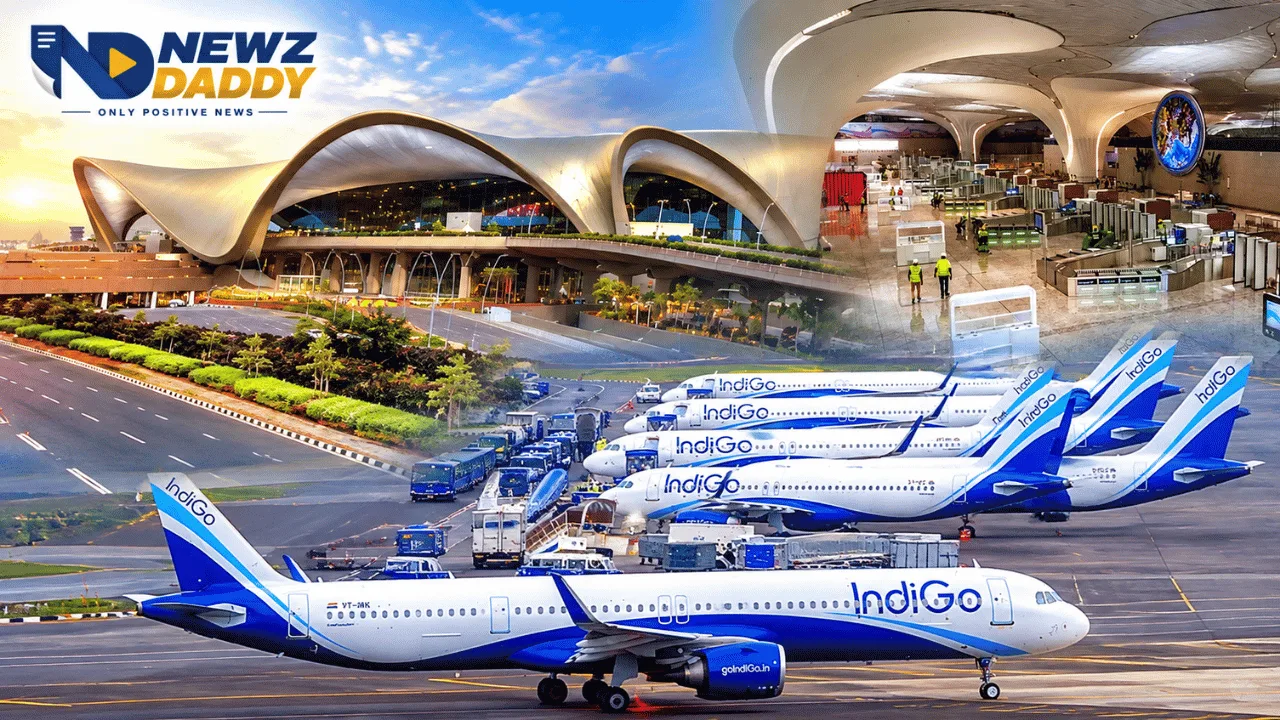
IndiGo Plans 12 Daily International Flights From Navi Mumbai
IndiGo to Move 12 Daily International Departures to Navi Mumbai Airport from February 2027
IndiGo plans to shift 12 daily international departures from Chhatrapati Shivaji Maharaj International Airport (CSMIA) to Navi Mumbai International Airport (NMIA) between February and July 2027, as Mumbai prepares to distribute more air traffic between its two airports. The move will cover 11 existing international destinations, with a new daily service to Kathmandu taking IndiGo’s planned international network at Navi Mumbai to 12 destinations.
IndiGo and Adani Airport Holdings Limited (AAHL) jointly announced the plan on 25 October 2026. The companies said they were in the final stages of operational planning and would confirm the dates after completing project coordination and securing the required operating approvals.
The change will affect passengers travelling from Mumbai to Bahrain, Riyadh, Dammam, Jeddah, Madinah, Kuwait, Ras Al Khaimah, Fujairah, Muscat, Dhaka and Jakarta. IndiGo intends to transfer its existing services to these destinations from CSMIA to NMIA in phases. The additional daily flight to Kathmandu will bring the airline’s total international destinations from the new airport to 12 by July 2027.
Domestic flights will also move from CSMIA to NMIA to support these international services. This is intended to help passengers connect between domestic and overseas flights at the same airport. The final arrangements will depend on the airline’s schedule and the facilities available to handle connecting passengers.
For travellers, the airport change will be a key detail to check before departure. Mumbai’s existing airport is in Santacruz, while the new facility is in Navi Mumbai. Passengers living in different parts of the Mumbai Metropolitan Region (MMR) may face different road journeys to reach the two airports. Anyone holding a ticket for a service affected by the move should check the airport named on the booking once IndiGo announces its final schedule.
The expansion comes as Navi Mumbai International Airport takes on a larger role in serving one of India’s busiest urban regions. Prime Minister Narendra Modi inaugurated NMIA on 8 October 2025. The airport was developed under the public-private partnership model, with Adani Airport Holdings involved in its development and operation.
According to the Ministry of Civil Aviation’s 2025 annual report, the airport’s first phase includes Terminal 1, designed to handle 20 million passengers a year, along with a single runway. The new facility was planned to add capacity for a region where the existing airport faces limits on further growth. Building up international services is a key step in giving airlines a wider choice of operating locations.
CSMIA will continue to serve domestic and international passengers during this change. IndiGo and AAHL say the transfer will free up capacity at the existing airport for the airline to add international routes in 2027. The companies have referred to planned services across Asia, Africa and Europe, using IndiGo’s growing fleet of Airbus A320 and A321 aircraft, as well as the A321XLR.
The A321XLR is designed for longer routes than earlier versions of the A321 family. Its range may give IndiGo more options for international services, subject to aircraft availability, route demand and operating approvals. The companies have not named the new routes that IndiGo intends to introduce from CSMIA as part of this plan.
The shift is also linked to the planned redevelopment of Terminal 1 at CSMIA, which the companies say is expected to take place by 2030. The associated reduction in airport capacity will require adjustments to flight operations. IndiGo and AAHL said they would work together to accommodate any further changes to IndiGo’s services at Terminal 1 through Terminal 2 at CSMIA.
Terminal 2 will therefore remain important to the airline’s operations at the existing airport while redevelopment work progresses. The companies have not provided a detailed timetable for the construction work or listed the individual services that may be affected by later changes.
The wider redistribution of flights has raised questions about how traffic should be divided between the two airports. Earlier proposals to move a larger number of international departures from CSMIA drew objections from airlines over the effects on schedules, passenger convenience and the allocation of airport capacity. The authorities called for further consultation before a wider shift could proceed. The latest IndiGo plan sets out a phased arrangement for one airline, with final dates still to be confirmed.
For AAHL, the change means preparing NMIA to handle more international passengers and transfers between domestic and overseas flights. The company and IndiGo are working on the infrastructure needed for these connections. The quality of those arrangements, along with transport access to Navi Mumbai, will affect how easily passengers can use the new airport.
The transfer is expected to give the Mumbai region more room to handle future air travel while CSMIA undergoes redevelopment. Its practical effect will become clearer when IndiGo publishes the final flight dates, connection schedules and details of the new Kathmandu service. Until then, the February to July 2027 period remains the planned window for the airline’s international expansion at Navi Mumbai.