


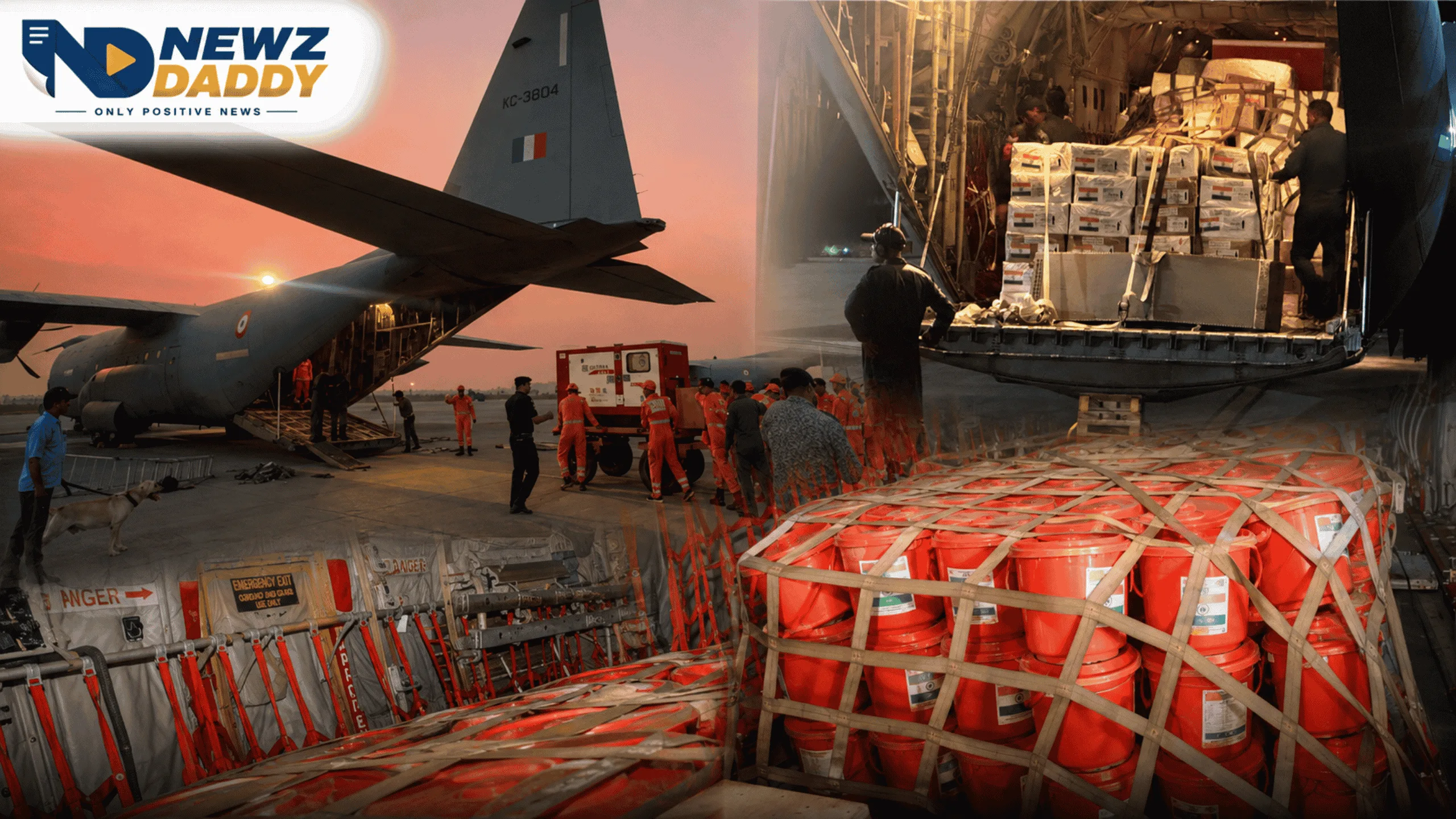
Nepal Floods: India Sends 47.5 Tonnes of Relief Supplies
India Sends More Relief to Flood-Hit Nepal as Rescue Efforts Continue
India has stepped up its emergency assistance to Nepal after devastating flash floods struck parts of the country on August 26. The Indian Air Force (IAF) has used military transport aircraft to move relief supplies, medicines and food to Kathmandu, while further aircraft and helicopters have been kept ready for rescue and evacuation work.
The first IAF flight left Hindon airbase near Delhi on the evening of August 26. A C-130J aircraft carried about 10 tonnes of humanitarian assistance and disaster relief material. The load included temporary shelters, blankets, hygiene kits, solar lamps and essential medicines. The aircraft took off at around 8.30 pm and reached Nepal within about two hours.
A second flight followed on August 27. An IAF C-17 Globemaster aircraft carried 37.5 tonnes of relief material to Nepal. The consignment included medicines and food items, along with other supplies needed by people affected by the floods.
Together, the first two flights carried 47.5 tonnes of assistance. The Indian government has indicated that more help can be sent if requested by Nepalese authorities.
The relief effort comes as Nepal faces a major rescue and recovery operation after flash floods caused widespread damage in areas close to the Nepal-China border. The disaster has affected homes, roads, bridges and other infrastructure. Several communities in mountainous areas have also faced serious access problems because roads and other routes have been damaged or blocked.
The geography of the affected region makes the response particularly difficult. Nepal has many remote mountain settlements, narrow valleys and rivers that can rise rapidly during extreme weather. When roads are damaged, aircraft and helicopters can become important tools for moving people, medical teams and supplies.
The C-130J and C-17 serve different purposes within the IAF’s transport fleet. The C-130J is suited to tactical transport and can operate from smaller airfields. This makes it useful when a rapid response is needed and access to larger airports is limited. The C-17 is a much larger transport aircraft and can move heavier loads over long distances.
The IAF has also indicated that additional C-17 and C-130 aircraft can be used to carry further relief supplies. Helicopters have been earmarked for rescue and evacuation operations, giving authorities another option for reaching places that may be difficult to access by road.
India’s response also has a longer history. The two countries have worked together during earlier natural disasters, including the devastating earthquake that struck Nepal in 2015. During that operation, Indian military aircraft transported rescue personnel, medical teams and relief material into Nepal soon after the earthquake.
The use of air transport in the current crisis reflects the same practical need. Relief supplies have to reach affected communities quickly, while rescue teams need access to areas where roads may no longer be usable.
The Indian response also comes as Nepal receives assistance from several other countries and international organisations. The scale of the disaster has created demand for medicines, food, temporary shelter and specialist rescue support. International agencies have also warned that children and displaced families need urgent humanitarian assistance.
For people affected by a sudden flood, the first needs are basic. Clean water, food, medicines, temporary shelter and safe transport can become urgent within hours. Medical supplies are especially important when health facilities have been damaged or when large numbers of people have been forced to leave their homes.
The latest Indian Air Force flights therefore form part of a wider relief effort rather than a single delivery. The first C-130J flight provided an immediate supply of essential items, while the larger C-17 aircraft increased the volume of material reaching Nepal the following day.
The situation remains focused on rescue, recovery and getting essential supplies to affected communities. Nepalese authorities and emergency teams continue to deal with damaged infrastructure, missing people and difficult terrain.
For India, the operation also demonstrates how its military transport fleet can be used during a humanitarian emergency outside the country. For Nepal, the immediate priority is more direct: reaching survivors, treating the injured and providing basic supplies as communities begin the difficult process of recovery.
Also Read:
President Droupadi Murmu Visits Air Force Bal Bharati School