


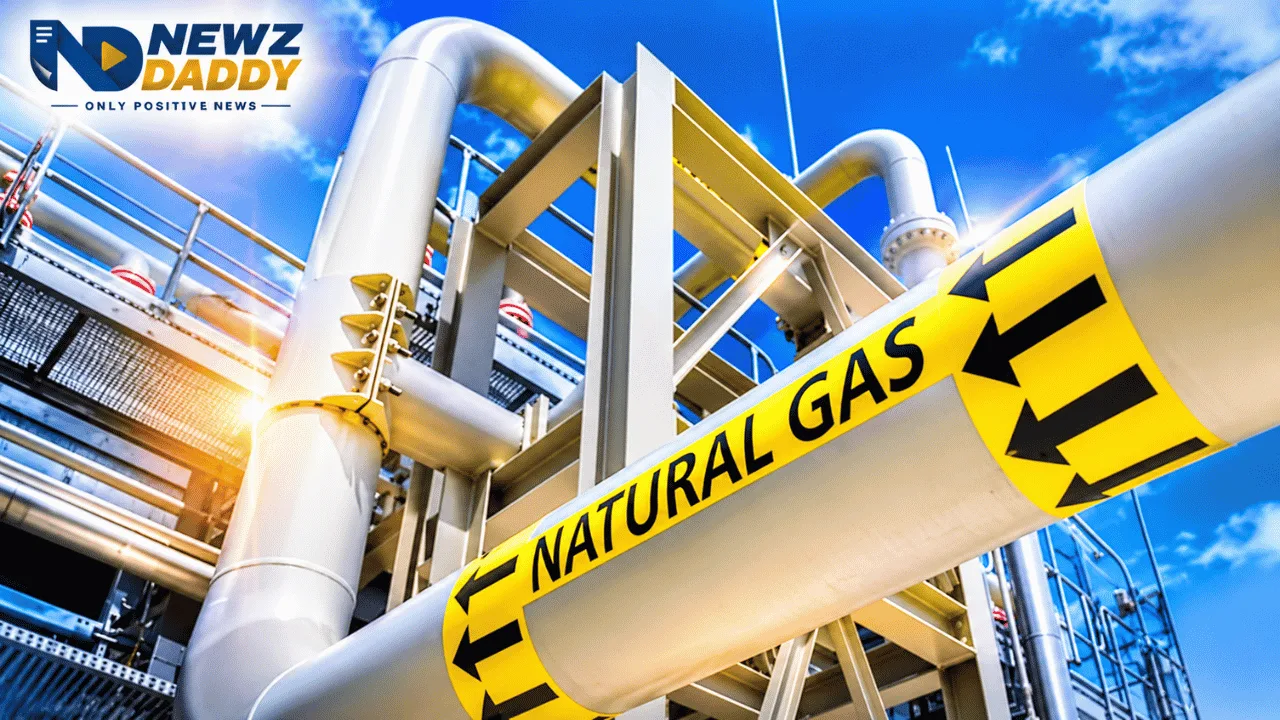
PNG Connection Drive Reaches 748 Districts Across India
India’s LPG-to-PNG Shift: Households Assured of Gas Supply During 90-Day Transition
India’s plan to move households from Liquefied Petroleum Gas (LPG) cylinders to Piped Natural Gas (PNG) has entered a new phase, with the government setting out a transition period intended to prevent interruptions in cooking fuel supplies.
Under the government’s arrangement, existing LPG supplies will continue for 90 days after consumers receive a communication or notice from their Oil Marketing Company (OMC) and the concerned City Gas Distribution (CGD) company. The supply will continue until the PNG connection is commissioned. Households that receive such a notice must apply for a PNG connection within the stipulated period. Those who fail to apply could face discontinuation of LPG supply after 90 days.
The move is part of India’s wider effort to expand household access to natural gas and reduce pressure on imported cooking fuels. It also places greater responsibility on gas distribution companies to extend pipeline networks and complete new household connections within the required time.
The policy is linked to the government’s wider programme to increase the use of natural gas in Indian homes. The Petroleum and Natural Gas Regulatory Board (PNGRB), which regulates the country’s natural gas distribution sector, is overseeing the expansion of city gas networks. Oil Marketing Companies and CGD operators are expected to coordinate the changeover, including applications, pipeline access and the installation of household connections.
There is an important distinction between the government notifications involved in this process. The LPG Control Order was amended through a notification dated 14 March 2026. Separately, the Government of India issued the Natural Gas and Petroleum Products Distribution (Through Laying, Building, Operation and Expansion of Pipelines and Other Facilities) Order, 2026, through a Gazette notification dated 24 March 2026 under the Essential Commodities Act, 1955. The latter provides a framework for faster approvals and the expansion of gas pipelines. PNGRB’s published directions also refer to three months for households that fail to apply for and obtain PNG connections.
India has already made considerable progress in extending piped gas connections. According to PNGRB’s Annual Statistical Report 2025-26, the country had 1.69 crore domestic PNG connections as of 31 March 2026. Of these, 1.07 crore were billed connections, indicating that the number of installed connections is higher than the number of households actively receiving billed gas supplies.
During the financial year 2025-26, the country added 19.08 lakh domestic PNG connections. The city gas distribution network covered 307 authorised geographical areas across 28 states and six Union Territories, reaching 748 districts and 99 per cent of India’s population.
The government has also taken steps to encourage gas companies to connect more households. Its Incentive Scheme for Promotion of Domestic PNG Connections was launched on 18 August 2026 and came into effect on 1 September 2026. The scheme offers eligible CGD companies additional gas allocation to increase active, billed household connections and extend pipelines into new areas.
Under the scheme, companies can receive an additional allocation of 200 Standard Cubic Metres of domestically produced gas for each eligible additional connection beyond the fixed target. The government expects this arrangement to improve the financial returns from household connections and encourage companies to complete installations more quickly.
For families using LPG cylinders, the biggest difference will be the way cooking fuel reaches their kitchens. PNG is supplied through a pipeline connected to the household gas system. Consumers do not need to book cylinders, arrange deliveries or store spare cylinders at home.
Gas consumption is measured through a meter, and households receive bills based on the quantity used. This arrangement can be useful for families living in apartment buildings and densely populated residential areas, where storing and moving cylinders can sometimes be difficult.
PNG also has different safety characteristics. Natural gas is lighter than air and generally rises when released, while LPG vapour is heavier than air and can collect near floor level. However, both fuels require proper installation, regular checks and safe handling. Consumers must follow the instructions issued by their gas supplier and report any suspected leakage immediately.
The cost of PNG will depend on local tariffs, taxes and actual consumption. The government’s September 2026 backgrounder states that PNG generally costs less than LPG on a per-unit energy basis. Consumers should still compare the applicable local rates before estimating their monthly savings.
The shift also has a wider connection with India’s energy imports. The Ministry of Petroleum and Natural Gas reports that India imports more than 55 per cent of its LPG requirement. According to the ministry’s Indian Petroleum and Natural Gas Statistics 2024-25 report, domestic LPG production stood at 12.9 million tonnes, while imports reached 20.7 million tonnes during that financial year.
Natural gas also has an import requirement. PNGRB’s 2025-26 report puts India’s dependence on imported natural gas at approximately 50 per cent of consumption. This means that greater PNG use alone cannot remove the country’s exposure to international fuel markets. Domestic production, gas sourcing arrangements and pipeline capacity will continue to matter.
For consumers, the immediate concern remains the actual availability of a working PNG connection. A pipeline passing through a neighbourhood does not automatically mean every household can receive gas at once. Building access, internal pipeline work, safety checks, meter installation and commissioning all have to be completed.
The government’s 90-day arrangement is intended to give households time to make the switch without losing access to their existing cooking fuel during the installation process. Anyone receiving an official communication from an OMC or CGD company should check the application procedure and submit the required documents within the stated period.
Consumers should also confirm the status of their connection directly with the concerned company rather than relying on messages circulating on social media. The final changeover depends on the connection being installed and commissioned according to the applicable rules.
India’s move towards piped cooking gas will depend on how quickly distribution companies can turn existing pipeline coverage into working household connections. For millions of families, the key question will be whether the new arrangement delivers a dependable supply without creating difficulties during the changeover.