

Viksit Bharat: Rajnath Singh Outlines India’s 2047 Roadmap
Rajnath Singh Says India is Moving Towards Viksit Bharat@2047, Points to Defence Output and Poverty Reduction
Raksha Mantri Rajnath Singh said India is working towards the Viksit Bharat@2047 goal by building stronger national capabilities, expanding domestic defence production and improving access to welfare programmes.
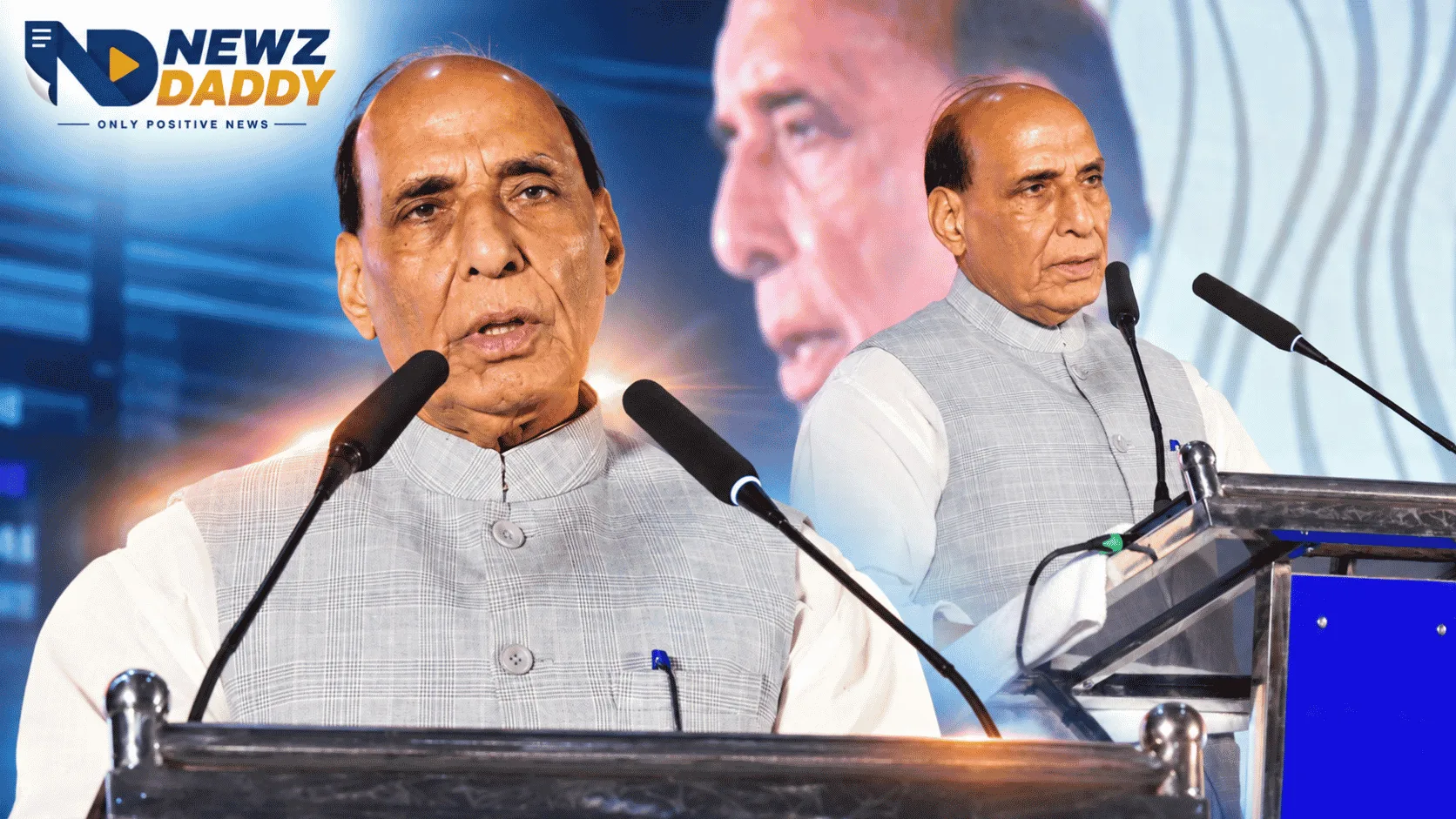
Speaking at an event in Kochi, Kerala, on September 18, 2026, Singh said the country’s progress over the past 12 years had taken place despite the COVID-19 pandemic, wars and pressure on the global economy. He said India was continuing its effort to become a self-reliant and developed country.
Rajnath Singh linked the government’s approach to values such as courage, public service, protection of citizens, compassion and a strong sense of national identity. He said these values should also shape the role of young Indians as the country works towards 2047, the year by which the government has set its developed India goal.
One of the main points in Singh’s speech was the rise in India’s defence manufacturing.
He said defence production, which he put at about Rs 40,000 crore in 2014, had reached nearly Rs 1.80 lakh crore. Recent Ministry of Defence figures put defence production at Rs 1.78 lakh crore in financial year 2025-26, compared with Rs 46,429 crore in 2014-15. Defence exports reached Rs 38,424 crore in 2025-26, up from Rs 686 crore in 2013-14.
The change has been supported by policies aimed at increasing domestic production and reducing dependence on imports. The Ministry of Defence has also introduced Positive Indigenisation Lists covering thousands of items that are to be sourced from Indian manufacturers.
The latest government figures say nearly 65 per cent of defence equipment is now made in India. Indian defence products are being exported to more than 80 countries, according to the Ministry of Defence.
Rajnath Singh told the Kochi gathering that Indian defence equipment was reaching around 100 countries. He also said defence exports had risen from around Rs 600 crore to about Rs 40,000 crore.
The figures show how quickly the defence manufacturing sector has expanded. They also point to a growing role for Indian companies, public sector units, smaller manufacturers and start-ups in defence supply chains.
Rajnath Singh also spoke about the role of young Indians in building new businesses and technologies.
“Our youth are building start-ups, creating unicorns, developing drones, building hydrogen trains, and making rockets and satellites. They are leaving no stone unturned to make India a developed nation,” he said.
The reference to start-ups and space technology comes as India’s private sector has taken a larger role in areas that were once dominated by government organisations. The country’s space sector, for example, has opened more opportunities for private companies and start-ups in recent years.
The government has also been seeking greater private participation in defence manufacturing. The Ministry of Defence has said that defence public sector undertakings, private companies, MSMEs and start-ups all have a role in expanding domestic production.
Rajnath Singh said more than 250 million people had been lifted out of poverty over the past 10 to 12 years.
NITI Aayog’s figures provide a related measure. Its latest poverty data says 24.8 crore people moved out of multidimensional poverty between 2013-14 and 2022-23. The multidimensional poverty rate fell from 24.8 per cent in 2015-16 to 11.28 per cent in 2022-23, according to the government body.
Rajnath Singh referred to programmes including PM SHRI, Ayushman Bharat, Lakhpati Didi, Pradhan Mantri Awas Yojana, Jal Jeevan Mission and Ujjwala Yojana while discussing access to public services.
Rajnath Singh also pointed to the Unified Payments Interface, or UPI, as an example of India’s digital infrastructure. UPI processed more than 24.5 billion transactions in August 2026, with a value of about Rs 29.82 lakh crore, according to National Payments Corporation of India data.
UPI has also been taken to overseas markets. NPCI has worked with partner countries to expand UPI-based payments, while its UPI One World service has allowed foreign visitors to use UPI payments in India without an Indian bank account or mobile number.
Rajnath Singh referred to India’s work on climate change and international cooperation. He said India had reached several climate targets ahead of schedule and supplied COVID-19 vaccines to other countries during the pandemic.
Rajnath Singh said India had provided free vaccines to people in the country and sent more than 300 million vaccine doses to 100 countries during COVID-19.
He also mentioned International Yoga Day, the International Solar Alliance and the Global Biofuels Alliance as examples of India’s international outreach.
The speech then moved to culture and national identity. Singh said India’s economic progress should be accompanied by greater awareness of its history and cultural traditions. He referred to “Sarva Dharma Samabhava”, or equal respect for all faiths, and argued that Indian traditions had at times been viewed through a Western framework that did not reflect their original meaning.
He called for young people to learn more about India’s history, culture and heritage. He said greater awareness could strengthen their sense of national identity and confidence.
He described journalism as the fourth pillar of democracy and said an independent and impartial press was needed to hold those in power accountable.
“The role of the media is not merely to report the news. It is also to ask difficult questions, bring the truth before the people, and hold those in power accountable,” he said.
Rajnath Singh’s comments came as the government continues to present Viksit Bharat@2047 as a long-term national goal. The speech in Kochi placed defence manufacturing, poverty reduction, technology, welfare, culture and the media within that wider plan.
For readers, the measurable parts of the discussion are already visible in government data: defence production has reached a record level, defence exports have grown sharply, UPI handles billions of transactions each month, and official poverty estimates show a large fall in multidimensional poverty. The larger question is how these gains will translate into jobs, household incomes, public services and living standards as India moves towards 2047.