


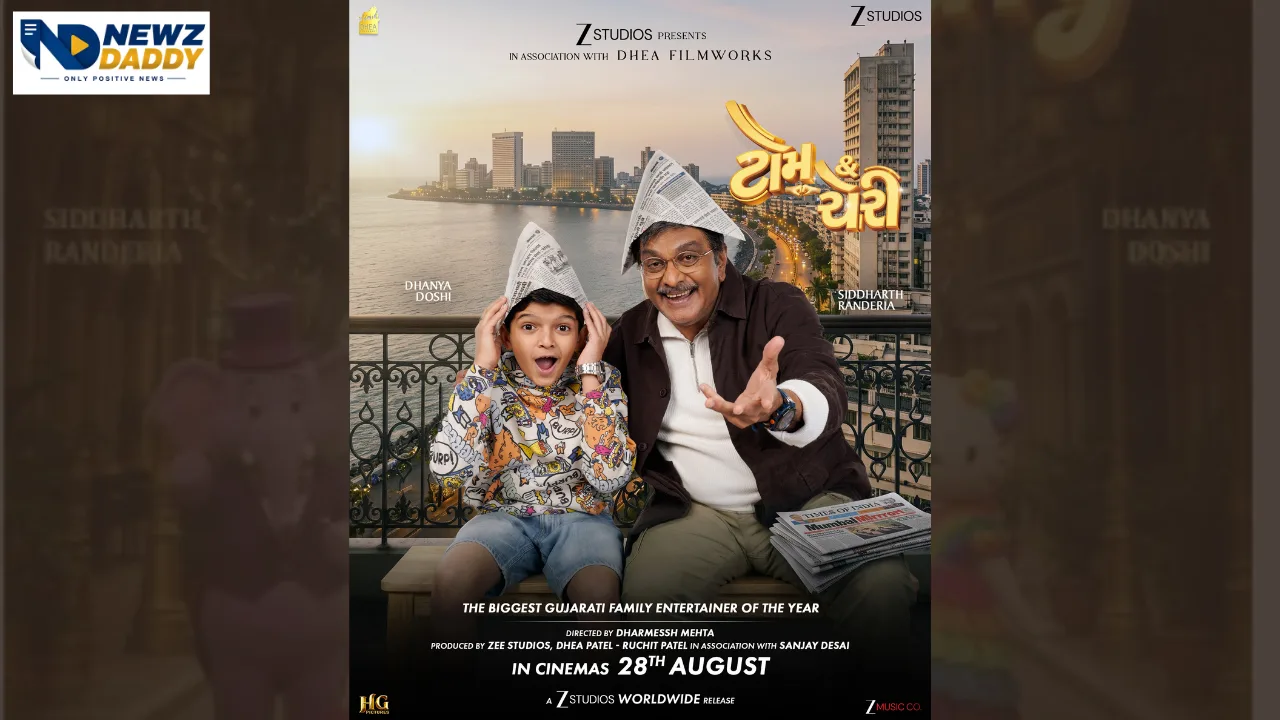
Zee Studios Gujarati Cinema Bet Brings Hope for Regional Films
Zee Studios enters Gujarati cinema with Siddharth Randeria’s Tom and Cherry, signalling wider regional film plans
Zee Studios has announced its first Gujarati film, Tom and Cherry, marking the company’s entry into one of India’s growing regional film industries. The film stars veteran actor Siddharth Randeria and forms part of a wider plan by the studio to expand its presence in regional language cinema through locally rooted stories with wider audience appeal.
The announcement is seen as an important step for Gujarati cinema, which has gained greater attention in recent years as more national production houses invest in regional films. Zee Studios already produces and distributes films in several Indian languages, and its latest move adds Gujarati to that growing portfolio. The company has previously expanded into other regional markets, including Marathi and South Indian language productions, as part of its broader content strategy.
The first project under this initiative is Tom and Cherry, a family drama led by Siddharth Randeria, one of the best-known names in Gujarati theatre and cinema. According to available film information, the movie is directed by Dharmesh S. Mehta and is scheduled for a theatrical release on 28 August 2026. The story follows a young boy who leaves home after witnessing constant conflict between his parents. His disappearance leads to a kidnapping investigation in which an innocent stranger becomes the main suspect.
Announcing the company’s plans, Sujal Parekh, Chief Business Officer, Zee Music Company, said:
“Regional cinema is driving the next phase of India’s entertainment story, and Gujarati cinema represents an incredible opportunity with its rich storytelling legacy and growing audience base. Our foray into Gujarati films is a strategic investment in the future of the industry. We want to build a strong slate of culturally authentic stories with mainstream appeal. Tom and Cherry is the first step in a larger vision to take Gujarati cinema and music to a wider national and global audience.”
The statement reflects a wider shift within India’s film business, where regional productions are attracting larger investments, wider theatrical releases and stronger digital distribution. Success stories from industries such as Marathi, Malayalam, Tamil and Telugu cinema have shown that films made in local languages can find audiences across the country when supported by strong storytelling and effective distribution.
Gujarati cinema has experienced steady growth during the past decade. Family dramas, comedies and socially themed films have drawn audiences in Gujarat as well as among Gujarati communities living in other Indian states and overseas. Several recent productions have performed well at the box office and on streaming platforms, helping improve the industry’s commercial outlook.
Siddharth Randeria has played an important role in that development. Known first for his long career in Gujarati theatre, he later became one of the industry’s most recognised film actors. His performances in popular family entertainers have helped attract audiences across different age groups, making him one of the most familiar faces in Gujarati-language cinema.
The arrival of a national studio such as Zee Studios could provide additional opportunities for filmmakers, actors, technicians and music professionals working in Gujarat. Large production companies typically bring stronger financing, nationwide marketing campaigns and wider cinema distribution networks, allowing regional films to reach viewers outside their traditional markets.
Industry observers have noted that several major Hindi film banners have recently shown greater interest in Gujarati cinema. Earlier this year, Dharma Productions also announced its entry into the Gujarati film sector with Jindagi Once More, another project featuring Siddharth Randeria. These developments suggest that larger production houses increasingly view Gujarati-language films as a viable part of India’s changing entertainment business.
For Zee Studios, the Gujarati expansion also fits its existing strategy of producing films in multiple Indian languages. According to the company’s latest annual report, Zee Studios released 20 films across seven languages during the previous financial year and has continued investing in regional productions as part of its long-term business plans.
While the commercial success of Tom and Cherry will only become clear after its theatrical release, the announcement itself signals growing confidence in Gujarati cinema’s future. National studios are increasingly recognising that audiences are willing to support stories created in their own language when they offer strong characters and relatable themes.
For Gujarati filmmakers, the development may open the door to larger budgets, broader collaborations and greater visibility across India. For audiences, it could mean a wider selection of locally made films backed by national distribution and marketing support.
As production houses continue to broaden their regional portfolios, Gujarati cinema appears to be entering another phase of growth. Zee Studios’ decision to begin that journey with Tom and Cherry places one of the state’s most established actors at the centre of a move that could help bring Gujarati-language films to more viewers across India and overseas.
Must Read:
Gujarati Film Industry Deserves Its Own CBFC Certification Centre in Ahmedabad