


Mumbai Airport to Demolish Terminal 1 in April 2027
Mumbai Airport’s Terminal 1 Set for Demolition as New Design and Capacity Plans Emerge
Mumbai’s ageing Terminal 1 is due to be replaced by December 2030, with plans to increase passenger capacity and improve airport operations during a major redevelopment.
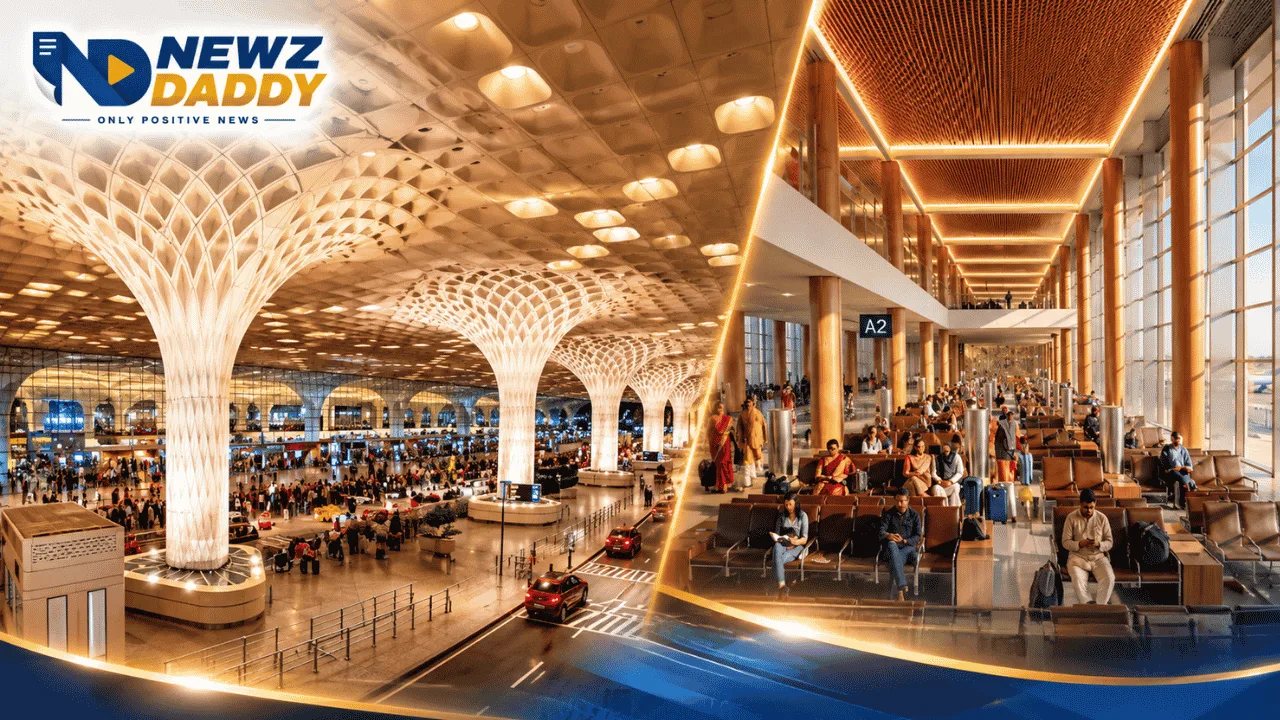
MUMBAI: Mumbai’s Chhatrapati Shivaji Maharaj International Airport (CSMIA) has shared artistic impressions of its proposed Terminal 1 (T1), giving airlines and passengers an early look at the design of a facility that is due to replace the airport’s ageing domestic terminal.
The airport operator presented the visuals during a meeting with the Airport Airline Operators Committee (AOC). The images show a proposed terminal with larger passenger areas, indoor greenery, local art and improved facilities. They represent the design direction and intended passenger experience, rather than a final picture of the completed building.
The existing terminal, commissioned in 1964, has been in service for more than six decades. Independent structural audits by Structwel in 2017 and IIT Bombay in 2024 identified safety and structural concerns. The airport operator says these findings have made the replacement of the old facility necessary.
The redevelopment is expected to raise T1’s annual passenger handling capacity from 15 million passengers per annum (mppa) to 20 mppa, an increase of about 33 per cent.
For Mumbai, which handles large volumes of domestic and international air traffic, the project will involve a major change to airport operations. The challenge will be to carry out the work while keeping flights running and limiting disruption to passengers.
The proposed terminal design places greater emphasis on the space available to travellers. The departure entrance is planned as a large, sweeping area, while the check-in hall is expected to have a column-free layout and natural light.
Murals inspired by Mumbai’s cultural heritage are proposed for the check-in area. The departure waiting area is expected to include indoor plants, premium lounges and large glass walls overlooking the runways.
At the arrival kerbside, the plans include a large flamingo sculpture. The bird is associated with the wetlands and natural habitats around Mumbai, where flamingos are a familiar sight during parts of the year.
The airport’s plans also include changes to the way passengers move through the terminal. Check-in counters are expected to increase from 74 to 109, a rise of 47 per cent. Security screening facilities are planned to expand 2.5 times, with 15 passenger lanes and five transfer lanes.
The number of aircraft contact stands, where passengers can board directly through an aerobridge, is due to increase from seven to 25. This would reduce the need for passengers to travel by bus to aircraft parked away from the terminal.
The plan also includes 12 modern e-gates in place of conventional boarding gates. Baggage reclaim facilities are expected to expand from five belts to 11, more than doubling the existing number.
These changes are intended to help the terminal manage more passengers while improving the flow of people through check-in, security, boarding and baggage collection.
The redevelopment will also affect the wider airport network. CSMIA currently has a combined capacity of about 55 mppa across its terminals. Following the redevelopment of T1 and the expansion of Terminal 2 (T2), the airport’s total capacity is expected to reach 65 mppa.
Mumbai’s second airport, Navi Mumbai International Airport (NMIA), is expected to play a role during the construction period. The two airports form part of a wider plan to serve the growing air travel needs of the Mumbai Metropolitan Region.
The transition will require airlines to adjust their operations. During the redevelopment, five million passengers per year are expected to be moved temporarily from CSMIA to other facilities, including NMIA.
IndiGo, Air India and Akasa Air have finalised plans to shift international flights accounting for around three million passengers per annum to Navi Mumbai. The remaining traffic is expected to be handled through a temporary relocation of slots from CSMIA’s Terminal 2.
The airport operator has said that about 91 per cent of its current traffic will remain unaffected by the temporary transfer. It has also assured airlines that the shifted international traffic will return to CSMIA after the redevelopment.
The existing T1 is scheduled for demolition from April 2027. The G+3 North-West Pier expansion at T2 is expected to become operational by March 2029 and will handle interim domestic traffic.
The new T1 is targeted for completion by December 2030. The schedule will require careful coordination between the airport operator, airlines and other agencies to maintain passenger services during construction.
For passengers, the key questions will be how the changes affect flight schedules, airport access and the time spent at check-in and security. The larger terminal and expanded facilities are intended to address these needs as air travel continues to grow.
The new T1 will occupy the site of the old terminal. Its final design and construction will determine how closely the finished building matches the artistic impressions now shared with airlines.
Mumbai’s airport redevelopment is also part of a wider effort to increase the city’s ability to handle air traffic. The completion of T1, together with changes at T2 and the role of Navi Mumbai airport, will shape how passengers travel through the region in the years ahead.
Must Read:
Air India Group Plans Phased Shift to Navi Mumbai By 2027
IndiGo Plans 12 Daily International Flights From Navi Mumbai