


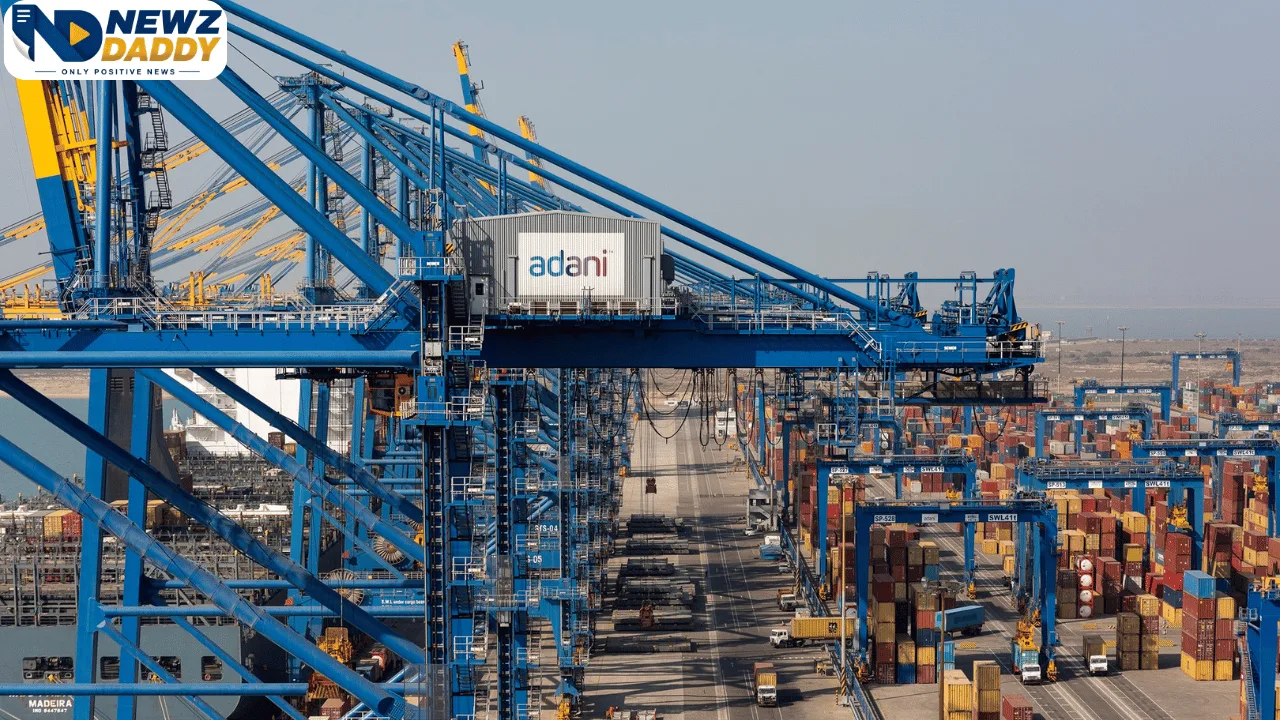
Adani Mundra Port Achieves Major Logistics Milestone
Adani Mundra Port Records Fastest Customs Cargo Clearance Among India’s Major Seaports
Adani Ports‘ Mundra Port has been ranked as India’s fastest seaport for customs cargo clearance in the National Time Release Study (NTRS) 2026, released by the Central Board of Indirect Taxes and Customs (CBIC). The report shows that the Gujarat port reduced the average time taken to release imported cargo from 55 hours and 34 minutes in 2025 to 32 hours and 27 minutes in 2026, an improvement of 41.6 per cent.
The National Time Release Study is conducted by the CBIC to measure how quickly imported goods move through customs after arriving at ports, airports, inland container depots and integrated check posts. The study forms part of India’s wider trade facilitation programme and follows the principles of the World Trade Organisation’s Trade Facilitation Agreement, which encourages countries to simplify customs procedures and reduce delays in international trade.
According to the 2026 study, 78.39 per cent of Bills of Entry processed at Mundra Port met the National Trade Facilitation Action Plan (NTFAP) target of completing customs clearance within 48 hours. This was the highest compliance level among India’s leading seaports during the assessment period.
Faster customs clearance has become increasingly important as manufacturers, exporters and importers try to reduce logistics costs and improve delivery schedules. Every hour saved at a port can lower storage expenses, reduce congestion and help goods reach factories, warehouses and retail markets more quickly. Efficient ports are also considered an important factor when companies decide where to invest in manufacturing and supply chain operations.
The report points to several factors behind Mundra Port’s performance, including digital processing, greater use of automation, improved coordination between customs officials and terminal operators, and wider adoption of technology-based cargo management systems. These measures have helped reduce waiting times for importers while supporting smoother cargo movement.
Another area where Mundra recorded strong results was Direct Port Delivery (DPD), a system that allows eligible importers to move containers directly from the port instead of routing them through Container Freight Stations (CFS). Cargo cleared through the DPD system at Mundra recorded an average release time of 24 hours and 30 minutes. Cargo moving through Container Freight Stations required an average of 34 hours and 52 minutes.
The difference is significant because Direct Port Delivery reduces container handling, shortens transport time and lowers logistics costs. The Government of India has encouraged wider adoption of DPD over recent years as part of its effort to improve the country’s ranking in global logistics performance and make trade more efficient.
The study also highlights the performance of importers participating in the Authorised Economic Operator (AEO) programme. The scheme recognises businesses with a strong record of customs compliance and allows them to receive faster processing through risk-based assessment. At Mundra Port, cargo moving under the combined AEO and Direct Port Delivery route achieved an average release time of only 15 hours and 18 minutes. According to the report, this was the fastest among all leading Indian seaports.
Comparisons with other major ports further illustrate the differences in cargo release times. The study recorded an average release time of 65 hours and 52 minutes at Mumbai’s Jawaharlal Nehru Port, commonly known as Nava Sheva. Chennai Port recorded 85 hours and 59 minutes, while Kolkata Port averaged 155 hours and 9 minutes.
The findings also compare performance across other cargo gateways. Among inland container depots, Ludhiana recorded an average release time of 58 hours. Tughlakabad reported 85 hours and 45 minutes, while Whitefield averaged 85 hours and 28 minutes.
Air cargo facilities, which often process time-sensitive shipments, also featured in the study. Ahmedabad Airport recorded an average release time of 35 hours and 41 minutes. Bengaluru averaged 42 hours and 59 minutes, Chennai 36 hours, Delhi 36 hours and 1 minute, Hyderabad 45 hours and 8 minutes, and Mumbai 43 hours and 24 minutes. In several cases, Mundra’s average release time was shorter than those recorded at major airports.
Mundra Port, located on the Gulf of Kutch in Gujarat’s Kutch district, has grown into India’s largest commercial port over the past two decades. It handles container cargo, dry bulk, liquid cargo, crude oil, automobiles and other commodities serving domestic industries and international trade. The port is operated by Adani Ports and Special Economic Zone Limited, India’s largest private port operator.
The rapid growth of manufacturing under programmes such as Make in India, expansion of dedicated freight corridors and increased investment in logistics infrastructure have placed greater attention on the efficiency of ports. Government agencies have steadily increased the use of electronic documentation, risk management systems and advance filing of cargo information to shorten customs processing times.
Reacting to the latest ranking, Adani Ports Mundra Executive Director Mr Rakshitbhai Shah said, “Being recognised as India’s fastest leading seaport for customs cargo clearance is a proud achievement for Mundra Port. This milestone reflects the strong collaboration between Mundra Customs, logistics partners, and the entire trade ecosystem. We sincerely thank the Central Board of Indirect Taxes and Customs (CBIC), the Mundra Customs team led by Customs Commissioner Shri Nitin Saini, and all our stakeholders for their continued partnership.”
The report also credits the role of Mundra Customs under Customs Commissioner Shri Nitin Saini. It notes that experienced officers, quicker customs procedures and close coordination among customs officials, logistics partners and terminal operators have contributed to faster cargo evacuation and improved operational efficiency.
The latest National Time Release Study suggests that India’s busiest ports continue to improve customs processes through digital systems, coordinated operations and risk-based inspection methods. For businesses involved in global trade, shorter clearance times can reduce costs, improve supply chain reliability and strengthen India’s position as a manufacturing and export destination.