


Prix Versailles World’s Most Beautiful Airports 2026 India Wins
Two Indian Airports Named Among World’s Most Beautiful in Prix Versailles 2026 List
Two airport projects managed by Adani Airport Holdings Limited (AAHL) have been included in the Prix Versailles World’s Most Beautiful Airports List 2026, placing Indian aviation infrastructure alongside some of the most acclaimed airport developments in Europe, Asia and North America.
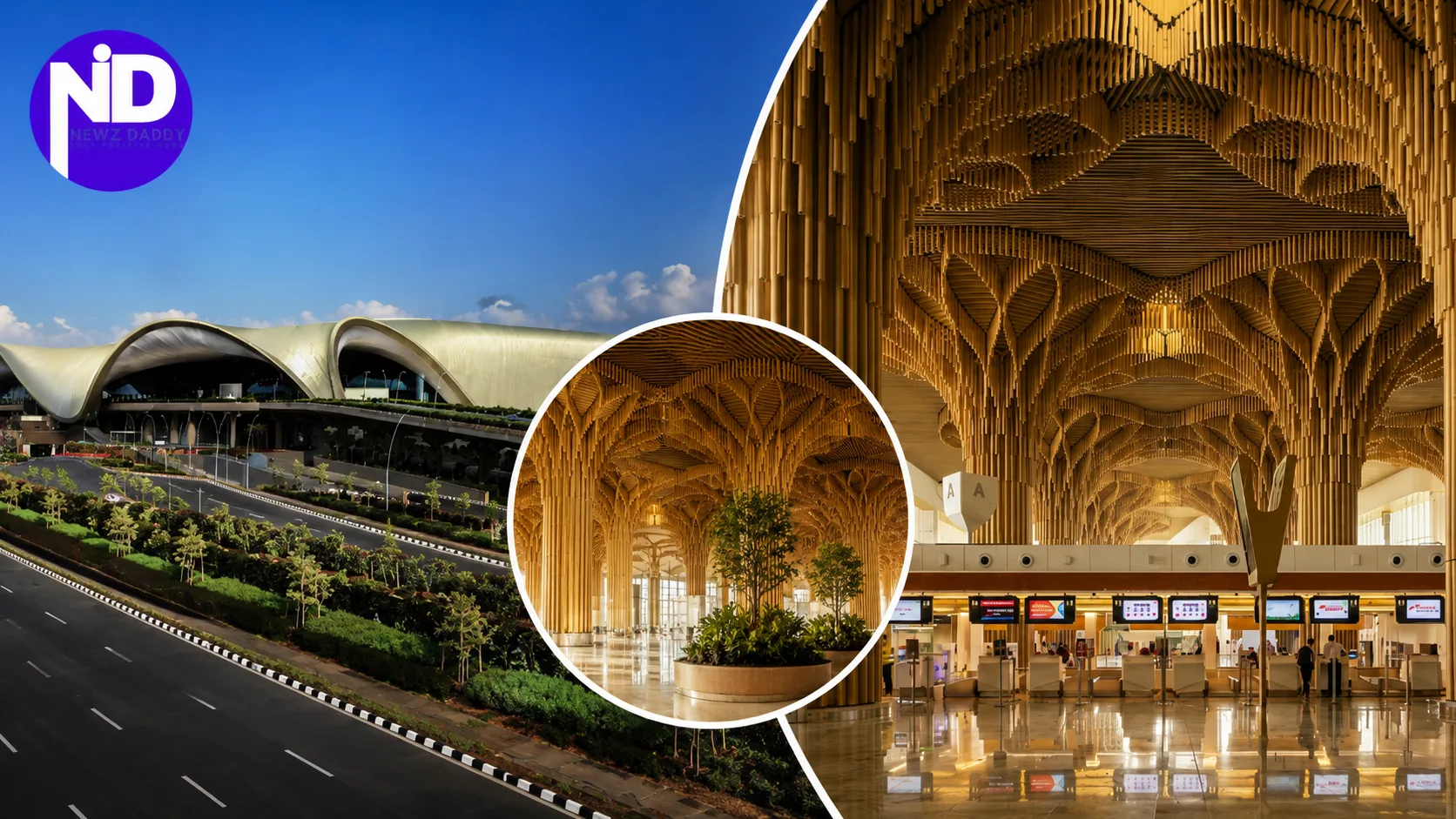
Navi Mumbai International Airport (NMIA) in Maharashtra and Terminal 2 of Lokpriya Gopinath Bordoloi International Airport (LGBIA) in Guwahati, Assam, were selected by Prix Versailles, an international architecture and design award programme presented annually at UNESCO headquarters in Paris. The awards recognise airports and terminals that combine architecture, passenger experience, sustainability, innovation and cultural identity.
The 2026 list includes seven airport projects from around the world. Alongside the two Indian entries are Guangzhou Baiyun International Airport Terminal 3 in China, Frankfurt Airport Terminal 3 in Germany, Techo International Airport in Cambodia’s Kandal Stueng province, Pittsburgh International Airport in the United States and San Diego International Airport in the United States. Later this year, three of the selected projects will receive additional World Titles for overall design, interior design or exterior design.
The recognition comes at a time when airports are being designed as major public spaces rather than simply transport facilities. Modern terminals increasingly serve as gateways that introduce visitors to a region’s culture, architecture and environment while handling growing passenger numbers.
Navi Mumbai Airport Draws Inspiration From the Lotus
Navi Mumbai International Airport’s Terminal 1 was recognised for its lotus-inspired design, which incorporates large open spaces, modern technology and architectural features intended to reflect contemporary India. According to details released alongside the award announcement, the terminal combines operational functions with public spaces and artwork, creating a distinctive visual identity for the new airport.
The airport is one of India’s most significant infrastructure projects. Developed to reduce congestion at Mumbai’s Chhatrapati Shivaji Maharaj International Airport, NMIA is expected to become a major aviation hub for western India. Once fully operational, the airport is planned to handle tens of millions of passengers annually and support the economic growth of the Mumbai Metropolitan Region.
For years, Mumbai’s existing airport has operated close to its capacity limits. Aviation analysts have argued that an additional airport is essential to accommodate rising passenger demand in one of India’s busiest air travel markets. The new facility is expected to improve connectivity for both domestic and international travellers while supporting trade, tourism and investment in the region.
Guwahati Terminal Reflects Assam’s Natural Heritage
In Guwahati, Terminal 2 of Lokpriya Gopinath Bordoloi International Airport was recognised for a design inspired by the Bamboo Orchid, a plant associated with the biodiversity of India’s north-eastern region. The terminal’s architectural language incorporates natural forms and sustainable design principles while maintaining the operational requirements of a modern airport.
The terminal has been developed as part of efforts to strengthen air connectivity in the North East, a region that has received increased government attention in recent years through investments in roads, railways and airports.
Assam’s largest airport serves as a key gateway to the North East and connects the region to major Indian cities and international destinations. The new terminal was designed not only to increase passenger capacity but also to provide a stronger sense of place by incorporating regional cultural and environmental themes.
The recognition is particularly significant for Assam because large-scale infrastructure projects from the North East rarely receive international architectural honours. The award places Guwahati alongside major global aviation centres and brings attention to the region’s design traditions and biodiversity.
Growing Importance of Airport Design
The Prix Versailles programme was established in 2015 and has become one of the most closely watched awards in architecture and design. The competition covers airports, hotels, museums, campuses, railway stations, sports facilities and other public buildings. Projects are assessed on factors including aesthetics, environmental performance, cultural relevance and user experience.
In recent years, airport design has gained increasing attention worldwide. Passenger numbers have grown steadily over the past two decades, prompting airport operators to rethink how terminals function. Designers are placing greater emphasis on natural light, energy efficiency, local cultural references and public spaces that improve comfort for travellers.
Many of the airports recognised by Prix Versailles feature large green areas, energy-saving technologies and architectural elements that reflect local history or geography. The trend reflects a broader shift in infrastructure planning, where public buildings are expected to contribute to environmental goals and regional identity as well as transportation needs.
Indian Aviation Sector Expanding Rapidly
The inclusion of two Indian airports on the 2026 list also reflects the rapid expansion of the country’s aviation sector. India has become one of the world’s fastest-growing air travel markets, driven by rising incomes, expanding regional connectivity and increasing demand for domestic flights.
Over the past decade, several new airports have been built while many existing terminals have undergone major upgrades. Government initiatives aimed at improving regional air connectivity have added routes to smaller cities, while private operators have invested heavily in airport modernisation.
Industry experts note that airport projects are increasingly judged not only by their capacity and efficiency but also by their architectural quality and environmental performance. International recognition can help attract investment, tourism and global attention to regions seeking to strengthen their economic profile.
Global Recognition for Indian Infrastructure
The appearance of Navi Mumbai International Airport and Guwahati’s Terminal 2 on the same global list marks a notable moment for Indian infrastructure development. One project represents a major new aviation hub for the country’s financial capital, while the other highlights the growing importance of the North East within India’s transport network.
Although the awards focus on design, they also draw attention to broader changes taking place in aviation. Airports are becoming symbols of regional ambition and economic development, often serving as the first point of contact for visitors arriving in a city or country.
For India, the recognition demonstrates how airport projects are increasingly competing on an international stage not only for operational performance but also for architecture, sustainability and passenger experience. Whether in the rapidly expanding Mumbai metropolitan region or the gateway city of Guwahati, these facilities are being viewed as public landmarks as much as transport infrastructure.
The final Prix Versailles World Titles for airports, interiors and exteriors will be announced later this year from among the seven projects selected for the World’s Most Beautiful Airports List 2026.
Must Read:
Navi Mumbai International Airport Launch Signals New India Rise
Navi Mumbai International Airport Takes First Historic Flight