


Sagar Adani Electrification Plan Highlights Gujarat’s Khavda
Sagar Adani Urges Faster Shift to Electric Power Systems at London Climate Forum
As countries face rising electricity demand, more extreme weather and pressure to cut carbon emissions, Adani Green Energy Limited Executive Director Sagar Adani has called for a faster move towards electrification supported by energy storage systems.
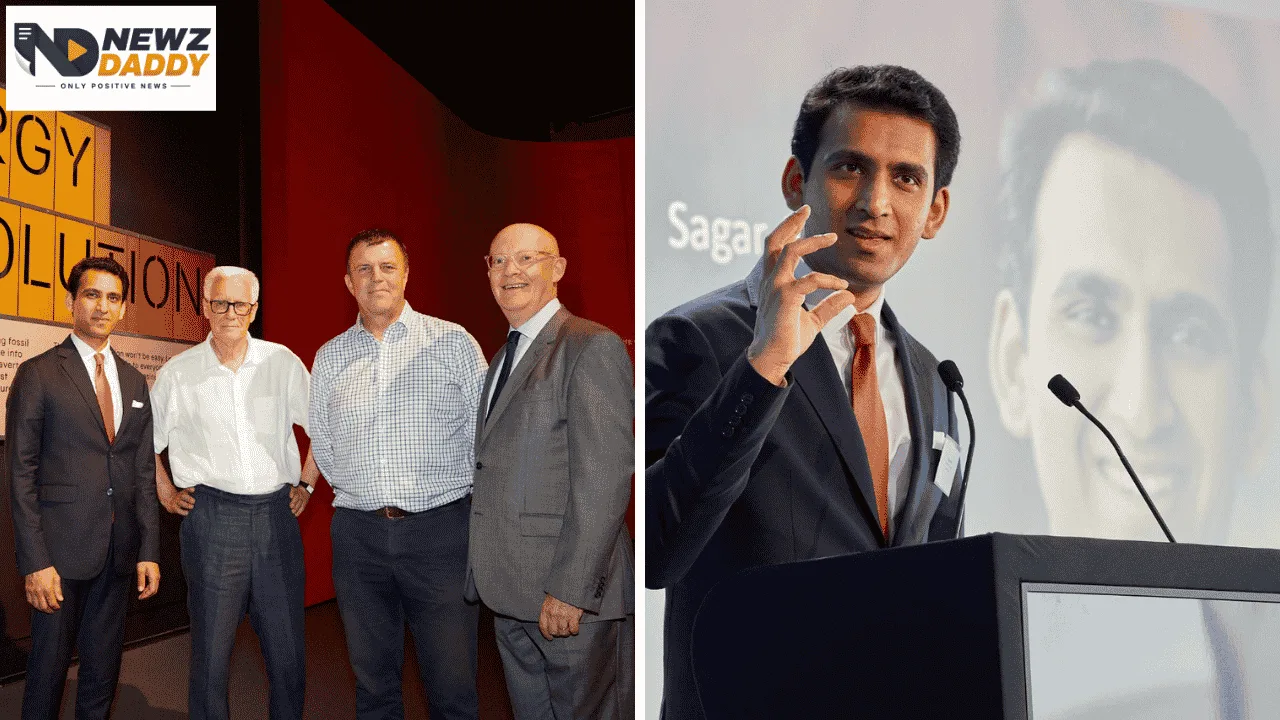
Speaking at the first Adani Green Energy Dialogue in London during London Climate Action Week, Mr Adani said countries seeking economic growth and energy security can no longer treat electrification as a future goal.
The event was organised by Adani Green Energy Limited (AGEL) with the Energy Transitions Commission (ETC) at the Science Museum in London. Policymakers, investors, climate specialists and industry leaders gathered to discuss how governments and businesses can speed up the move towards cleaner energy systems.
Addressing the meeting, Mr Adani said: “Energy security, affordability and sustainability are among the defining challenges of our time. Electrification is emerging as one of the most effective pathways to address all three. For countries seeking resilient growth and greater energy independence, accelerating electrification is no longer an option but an imperative.”
Electricity demand is expected to rise sharply over the coming decades as transport, industry and heating systems increasingly move away from coal, oil and natural gas. The International Energy Agency has repeatedly stated that electricity could become the largest source of final energy use globally before mid-century as countries work towards climate goals.
Mr Adani argued that renewable energy generation alone would not be enough without large-scale storage systems that can supply electricity when the wind is not blowing or the sun is not shining.
He said: “Renewable energy reaches its full potential when paired with storage technologies such as Battery Energy Storage Systems (BESS) and Pumped Storage Projects (PSPs). They make clean power reliable, affordable and available round the clock. At Adani Green, we are bringing this vision to life as we advance towards 50 GW of renewable energy capacity by 2030, led by the world’s largest renewable energy plant at Khavda, Gujarat, where clean energy is being integrated with large-scale storage.”
Battery Energy Storage Systems store surplus electricity produced during periods of high solar or wind generation and release it during peak demand periods. Pumped storage projects use surplus electricity to pump water uphill and generate power when electricity demand rises. Energy experts consider both technologies important for balancing modern electricity grids with a growing share of renewable energy.
The Khavda renewable energy project in Gujarat’s Kutch district has become one of India’s largest clean energy developments. Spread across hundreds of square kilometres of barren land near the India-Pakistan border, the site is expected to eventually deliver 30 GW of solar and wind capacity, making it one of the largest renewable energy complexes in the world.
Adani Green has already installed several gigawatts of generation capacity at the site while rapidly expanding battery storage infrastructure to support round-the-clock power supply. India aims to achieve 500 GW of non-fossil fuel electricity generation capacity by 2030, making projects such as Khavda important for national energy planning.
The London event took place during London Climate Action Week, which has grown into one of the world’s largest independent climate gatherings, attracting thousands of participants and hundreds of events focused on finance, technology and climate policy.
Two panel discussions were chaired by Lord Adair Turner, Co-chair of the Energy Transitions Commission, and Nigel Topping, Co-founder of Ambition Loop and Chair of the United Kingdom Climate Change Committee.
Participants included representatives from Octopus Energy, Schneider Electric, Climate Bonds Initiative, Green Finance Institute and the Adani Group.
Lord Turner stressed that wider electrification remains central to climate targets around the world.
He said: “To build zero emission economies and limit global warming to manageable levels, we need to pull many levers – but by far the most important is clean electrification – electrifying as much of the economy as possible and decarbonising electricity generation as far as possible. The good news is that electrification is already economic in many sectors, such as road transport, building heating and low temperature industrial heat; but also that technological progress is increasingly making it possible to electrify even the high temperature heat demands seen in heavy industry.”
Nigel Topping focused on investment and modern power grids.
He said: “Whilst investment in decarbonising power systems continues to accelerate, the real economic and climate benefits come from electrifying parts of the economy still largely powered by fossil fuels. A clear understanding of how technology costs continue to fall and of the role of flexibility in a modern grid are keys to unlocking the large amounts of investment required.”
The discussions came as Europe, Asia and North America continue to experience stronger heatwaves that are increasing demand for air conditioning and placing extra pressure on electricity networks. Scientists have warned that hotter summers could become more common as global temperatures rise.
Participants at the forum agreed that industries such as artificial intelligence, advanced manufacturing, digital infrastructure and data centres will need far larger amounts of electricity in the coming years. Meeting that demand while reducing emissions will require major investment in generation, transmission and storage infrastructure.
The Adani Group says it has committed more than US$100 billion towards energy transition projects and related infrastructure. Its investments include renewable energy generation, transmission networks, energy storage systems, green hydrogen and digital infrastructure.
The programme concluded with a visit to the Energy Revolution: The Adani Green Energy Gallery at London’s Science Museum. The gallery uses interactive displays to explain how electricity systems are changing and how countries can reduce emissions while meeting growing energy demand.
The gallery opened in March 2024 and has since attracted more than one million visitors, according to organisers.
Earlier in the same week, Adani Group Chairman Gautam Adani used the company’s Annual General Meeting to repeat plans for a wider energy portfolio that includes renewable energy, storage systems, green hydrogen, electricity transmission and nuclear energy.
He also announced plans to develop up to 10 GW of nuclear power generation capacity, with the company arguing that nuclear energy, renewable generation and storage technologies can work together to provide low-carbon electricity for future demand.
Must Read:
Vande Bharatam Launched by Gautam Adani Across India
Adani University AI Curriculum Adds New AI Courses for Students