


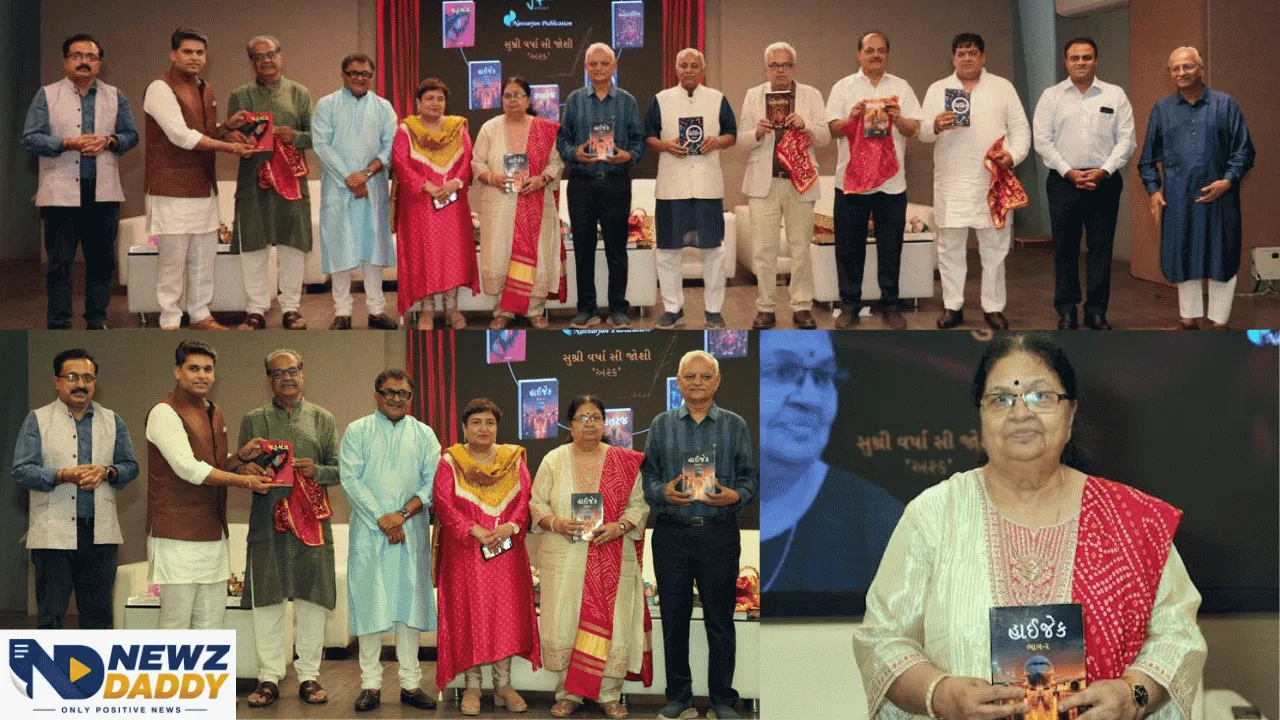
Varsha C. Joshi Launches Five Gujarati Novels in Ahmedabad
Varsha C. Joshi Begins a New Chapter at 70 as Five Gujarati Novels Reach Print
Many people spend their retirement slowing down. Former school teacher Varsha C. Joshi has done the opposite. After completing a 35-year career in education, she entered the world of digital writing at the age of 65. Six years later, Varsha C. Joshi has written dozens of Gujarati novels and story collections, earned millions of online readers, received recognition from the reading platform Pratilipi, and now celebrated another milestone with the publication of five of her novels in printed form.
Five books by Varsha C. Joshi, who writes under the pen name “Ashk”, were released at the Ahmedabad Management Association (AMA) on 11 July. Published by Navsarjan Prakashan of JP Group, the titles include Shatranj, Missing (Parts 1 and 2), Shadyantra, Sneh Sarita, and Hijack (Parts 1 and 2).
The books were launched by Bhagyesh Jha, Chairman of the Sahitya Akademi and a retired Indian Administrative Service (IAS) officer. The programme was attended by former Shree Vidhyanagar High School Principal Dr Prabhabudas Patel, actor Archan Trivedi, Mission Health Physiotherapy Founder and Director Dr Aalap Shah, and AMA representative Unmesh Dixit. During the event, Joshi’s daughter Dhara and son-in-law Dipeshkumar Sheth thanked JP Group Chairman Jayeshbhai Shah for bringing the books into print. Her granddaughters, Dvija and Swara, were also present as the family marked the occasion together.
The publication reflects a growing trend in Indian regional literature, where digital platforms are helping writers reach readers before their work appears in print. Over the past decade, online reading apps have expanded access to Gujarati, Hindi, Marathi and several other Indian languages, allowing new and established authors to build audiences without waiting for conventional publishing opportunities.
Varsha C. Joshi’s literary career began in 2020 after she joined the Pratilipi platform. Until then, she had been known primarily as a teacher. An alumna of Shree Vidhyanagar High School, she later returned to the same institution as a teacher and completed 35 years in the profession before retiring.
According to the information shared during the launch, she has since written 41 novels and 23 collections of short stories in Gujarati. The five books released in Ahmedabad represent only a small part of her overall body of work.
Varsha C. Joshi’s writing has attracted a large digital audience. Organisers said her stories have received responses from more than 3.5 million readers on Pratilipi, while over 4,500 followers regularly read her work on the platform. She has also received the Pratilipi Super Writer Award in recognition of her contribution.
Varsha C. Joshi’s academic interest in Gujarati literature predates her online writing career. Varsha C. Joshi’s M.Phil dissertation examined the rural novels of noted Gujarati author Pannalal Patel, whose works remain an important part of modern Gujarati literature. Varsha C. Joshi has also written stories using regional Gujarati dialects, which have attracted a positive response from online readers.
One feature of her writing routine has drawn particular attention. She said she writes at least two stories every day and often develops three novels at the same time for online publication. Maintaining such a schedule requires discipline, especially because many digital reading platforms encourage authors to publish regular instalments to keep readers engaged.
During the event, Varsha C. Joshi reflected on the period after retirement when she wondered how she would spend the next stage of her life. She credited her granddaughter Dvija with changing her outlook. According to Joshi, a simple answer from Dvija inspired her to take up writing seriously, leading her towards a full-time literary pursuit.
The journey illustrates how retirement is increasingly becoming a period of new professional and creative beginnings for many Indians. Longer life expectancy, improved digital access and online publishing platforms have made it easier for retired professionals to develop careers in fields that were once difficult to enter later in life. Authors, artists, educators and subject experts are now able to reach readers directly through digital channels before seeking traditional publication.
Gujarati literature has also experienced steady growth through digital platforms, with readers increasingly discovering fiction through smartphones and tablets. While printed books continue to hold cultural value, online publication has opened opportunities for writers working in regional languages to build communities of readers across India and among Gujarati-speaking audiences overseas.
The publication of Varsha C. Joshi’s novels in printed form, therefore, represents more than a personal achievement. It marks the movement of work that first found success in the digital space into the traditional publishing world, allowing it to reach libraries, bookshops and readers who prefer printed editions.
Speakers at the programme described Joshi’s commitment to writing after retirement as an example of lifelong learning and creative dedication. They said her career shows that age does not prevent people from pursuing new ambitions or contributing to literature.
As the programme concluded, those attending wished her success in her future writing projects and expressed hope that Gujarati readers would continue to see more novels and stories from her in the years ahead. For Joshi, the launch of five printed books is another milestone in a literary career that began only after retirement but has already produced a substantial body of work and built a wide readership across digital platforms.