


Bajaj Finance Takes Financial Literacy Drive to Three Villages
Bajaj Finance Takes Financial Literacy Drive to Three Villages in Ahmedabad
Arthsutra Samvad sessions in Daskroi focus on savings, loan repayments and protection against online financial fraud.
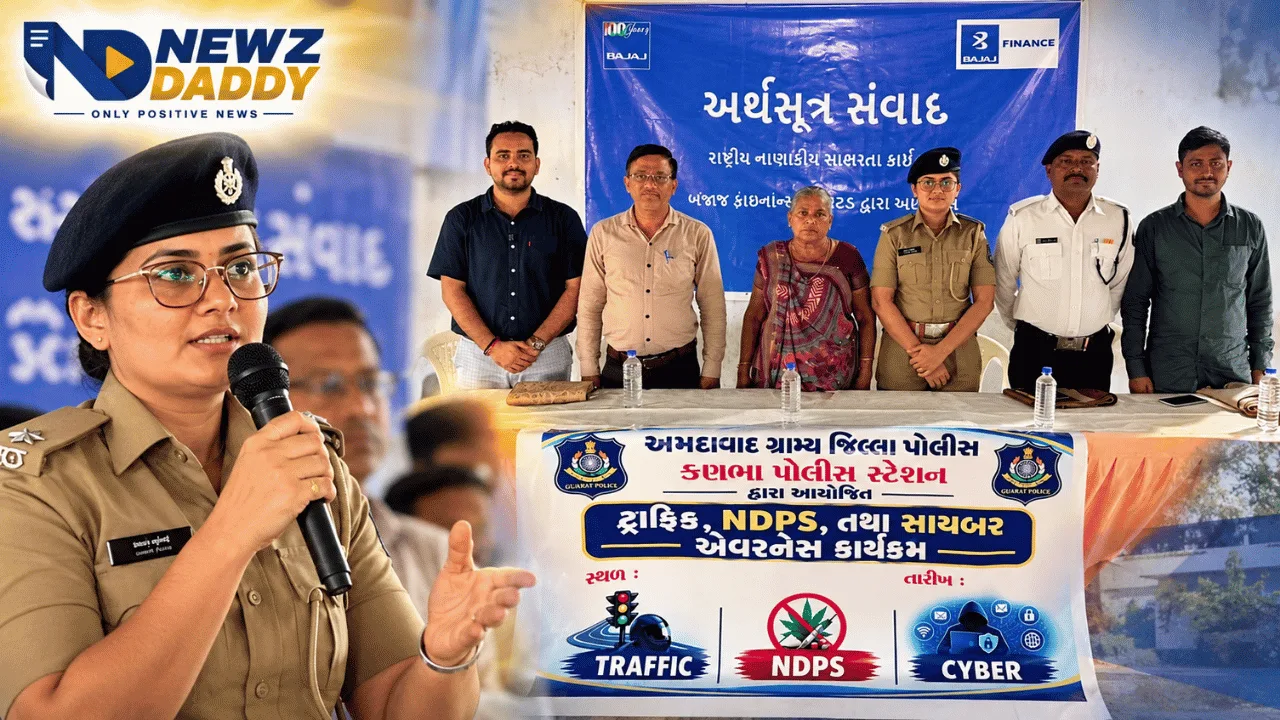
Residents of three villages in Ahmedabad district received lessons on managing money and avoiding online fraud during a financial literacy programme organised by Bajaj Finance Ltd. in September 2026.
The sessions were held at Kanbha Gram Panchayat, Bhavda Gram Panchayat and the Bakrol Bujrang Gram Panchayat office in Daskroi taluka. The programme, called Arthsutra Samvad, covered household budgeting, savings, responsible borrowing, loan repayments and ways to identify financial scams.
The initiative is part of Bajaj Finance’s wider rural financial literacy programme. It also follows the Reserve Bank of India’s efforts to improve financial awareness among people in rural and urban areas.
For villagers who use mobile phones for banking, payments and financial services, understanding online risks has become an important part of handling money. The sessions addressed threats such as fake investment offers, fraudulent WhatsApp groups, suspicious links, harmful mobile applications and digital arrest scams.
Participants were advised to report financial cybercrime by calling India’s national cybercrime helpline, 1930, as soon as possible.
At the Bakrol Bujrang Gram Panchayat office, Police Sub-Inspector Vijay M. Namsa of Kanbha Police Station spoke about the methods used by online fraudsters. He explained how scammers contact people, gain their trust and use fear or false promises to take their money.
Namsa also discussed the first two hours after a financial fraud, often described during the session as the golden hour. He urged residents to report incidents quickly so that authorities could take steps to limit financial losses.
He warned people against digital arrest scams, fake investment groups on WhatsApp, malicious APK files and links from unknown sources. Such scams can put personal information, banking details and savings at risk.
The programme was attended by Pruthvisinh Chauhan, sarpanch of Bakrol Bujrang Gram Panchayat, and Nileshkumar Patel, principal of GLS High School, Bakrol. A large number of local residents also attended the session.
At Kanbha, the speakers included Ashaben Chaudhary, PC at Kanbha Police Station; Baluben Thakor, sarpanch of Kanbha Gram Panchayat; and Dharmendra Patel, principal of Sarvajanik High School.
The Bhavda session was attended by Anirudh Bihola, sarpanch of Bhavda Gram Panchayat; Sunil Pival, a Traffic Regulation Branch (TRB) jawan in Daskroi taluka; and Bhartiben Patel, principal of Bhavda Primary School.
The speakers explained how families could plan their monthly spending and set aside money for future needs. They also discussed insurance as a way to protect families from unexpected expenses caused by illness, accidents or other emergencies.
Anirudh Bihola spoke about the connection between borrowing and a person’s financial record.
“Financial literacy is not just about understanding money; it is about building trust in your financial future. Whether it is a small loan or a major business investment, timely repayment shapes your credit history and opens doors to greater opportunities in life.”
Bihola also thanked the organisers for holding awareness sessions in rural communities.
His remarks drew attention to an issue that affects people who borrow money for farming, household expenses, education or small businesses. Repaying loans on time helps borrowers maintain a positive credit record. This can influence their ability to access credit in the future, although loan approval also depends on lenders’ policies and a borrower’s financial position.
The sessions in Daskroi took place against the backdrop of wider efforts by India’s financial authorities to improve money management and protect customers. The Reserve Bank of India has held its annual Financial Literacy Week since 2016. Its 2026 edition, held from 9 to 13 February, focused on KYC, or Know Your Customer, under the theme ‘KYC: Your First Step to Safe Banking’.
The RBI’s financial education work covers savings, borrowing, digital payments, customer protection and the risks of financial fraud. Its programmes also use local outreach to reach people who may have limited access to formal financial information.
Government figures show the scale of the challenge posed by online financial crime. The Ministry of Home Affairs reported that India’s Citizen Financial Cyber Fraud Reporting and Management System had helped save more than ₹11,158 crore across over 32.8 lakh complaints by 30 June 2026.
The system allows people to report financial fraud quickly and supports coordination between banks, financial institutions and law enforcement agencies to prevent stolen money from moving through the banking system.
The national helpline 1930 plays a key role in this process. People who lose money to online fraud are advised to call the number immediately and complete the complaint process on the National Cyber Crime Reporting Portal. Quick reporting can allow authorities and banks to act before the money is transferred further. It does not guarantee that the money will be recovered.
The Daskroi sessions brought financial education into three village-level public spaces, where residents could hear directly from company representatives, local leaders, teachers and police personnel. Topics ranged from everyday household budgets to the risks of sharing personal information online.
For rural families, access to clear information about loans, savings, insurance and digital fraud can help them make better financial decisions. The programme’s reach and long-term impact, however, will depend on whether residents can apply what they learn in their daily lives.
Must Read:
Bajaj Finance and Police Join Hands to Knock Out Digital Fraud in Ahmedabad