


Mumbai Cheers Bajaj Group 100 Years Historic Journey
Bajaj at 100: From Freedom Movement to Global Scale PM Narendra Modi Hails a Century of Nation-Building
The Bajaj Group, one of India’s oldest business houses and among the country’s largest conglomerates with a market value of nearly USD 148 billion, completed 100 years in business on Monday. The occasion became more special as Prime Minister Narendra Modi congratulated the group and praised its long contribution to India’s growth and nation-building.
Founded in 1926 by Jamnalal Bajaj in Mumbai, the group today reaches one in every three Indian households. It has more than 100 companies, exports products to over 100 countries and employs more than 1.3 lakh people across sectors such as automobiles, financial services, electrical goods and engineering.
Jamnalal Bajaj was not only an industrialist. He was also deeply involved in India’s freedom movement. Historians and Gandhian scholars often describe him as Mahatma Gandhi’s “fifth son” because of their close relationship and shared values. Jamnalal Bajaj strongly supported swadeshi, rural development and social reform. He even gave up the British title of “Rai Bahadur” during the non-cooperation movement.
The Prime Minister, in his message to the Bajaj family, said the group had remained relevant across generations because of its ability to adapt to changing times. He added that the company had created jobs, supported innovation and helped communities through many phases of India’s development journey.
The Bajaj story is closely linked with India’s industrial rise after Independence. Under Kamalnayan Bajaj, the group expanded into manufacturing and electrical products. Later, Rahul Bajaj transformed Bajaj Auto into one of India’s biggest automobile brands. During the 1970s and 1980s, the Bajaj scooter became a common sight on Indian roads and “Hamara Bajaj” turned into one of the country’s most remembered advertising campaigns.
Rahul Bajaj was widely respected in India’s corporate world for speaking openly on economic and public issues. He also served in the Rajya Sabha and led the Confederation of Indian Industry twice. In 2001, he received the Padma Bhushan for his contribution to the Indian industry.
Today, the Bajaj Group is present in global markets. Bajaj Auto is among the world’s leading two and three-wheeler manufacturers and exports vehicles across Africa, Latin America, the Middle East and Southeast Asia. Industry reports show that Bajaj motorcycles are sold in more than 70 countries, while brands such as Pulsar have gained international popularity.
Rajiv Bajaj, Managing Director of Bajaj Auto, said during the celebration that the company’s partnership with the Austrian motorcycle brand KTM showed how Indian firms can become global co-creators rather than mere followers. The Bajaj-KTM partnership is often considered one of the most successful international tie-ups in the motorcycle industry.
The group is also preparing to enter the healthcare sector through Bajaj Integrated Health System. Nirav Bajaj said the family’s long-standing belief has always been that business should benefit society, especially poor and young Indians. The company’s CSR initiative “Bajaj Beyond” plans to support over two crore young Indians in the next five years through education, livelihoods and sustainability programmes.
Social work has remained a major part of the Bajaj legacy for decades. Jamnalal Bajaj supported women’s education, fought against dowry and child marriage, and promoted khadi and rural upliftment. The Jamnalal Bajaj Foundation, established later by the family, continues to honour individuals working for Gandhian values and social development through the Jamnalal Bajaj Awards.
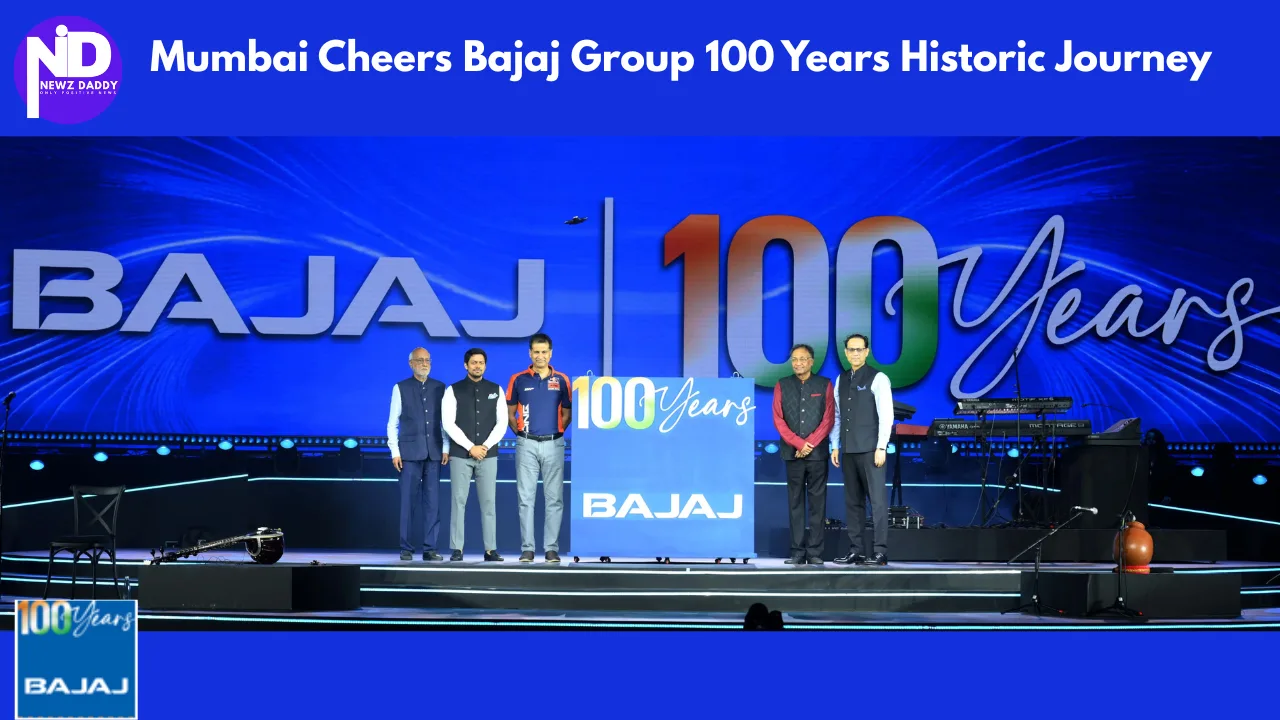
The centenary event held at the National Sports Club of India in Mumbai brought together industrialists, politicians, celebrities and members of the Bajaj family. A special film on Jamnalal Bajaj and Mahatma Gandhi, directed by Rajkumar Hirani, was screened during the evening. Grammy Award winner Ricky Kej also performed live at the event.
Sanjiv Bajaj, Chairman and Managing Director of Bajaj Finserv, said the next chapter of India’s growth would depend heavily on technology, innovation and young entrepreneurs. He added that artificial intelligence and financial inclusion would play a major role in creating new opportunities for people across India.
As the Bajaj Group enters its second century, the company appears focused on balancing business growth with social responsibility. From supporting India’s freedom movement to becoming a global industrial name, the Bajaj journey reflects many chapters of India’s own economic and social transformation.
Must Read:
Bajaj Finance and Police Join Hands to Knock Out Digital Fraud in Ahmedabad