


Indian Coast Guard Reforms Bring Big Changes for Officers
Rajnath Singh Announces Two Indian Coast Guard Reforms on Women’s Careers and Support for Families of Missing Personnel
Defence Minister Rajnath Singh has announced two major policy changes for the Indian Coast Guard (ICG). One gives women the same opportunities as men to join and build long-term careers in the force. The other is designed to speed up financial support for the families of Coast Guard personnel who go missing at sea while on duty and are later treated as presumed dead for compensation purposes.
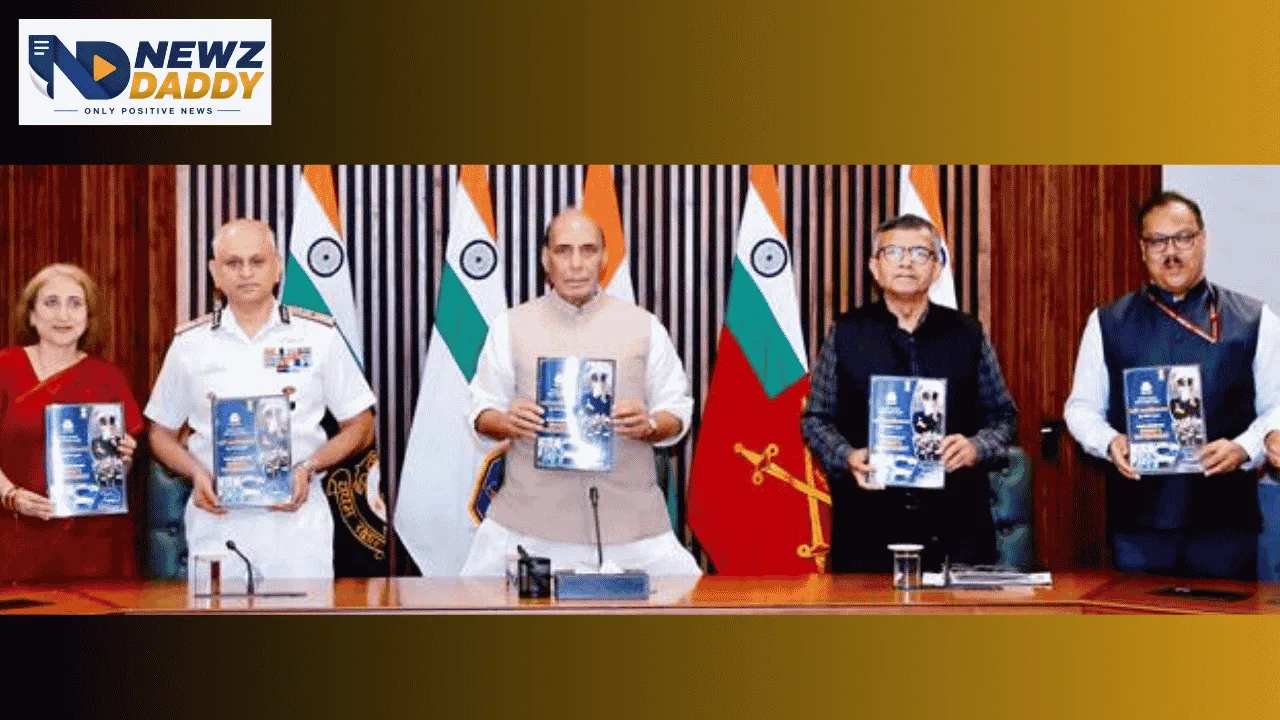
The announcements were made at Kartavya Bhavan 2 in New Delhi during a programme attended by Defence Secretary Rajesh Kumar Singh, Director General of the Indian Coast Guard Paramesh Sivamani and senior officials.
The reforms come as the Indian Coast Guard prepares to mark its Golden Jubilee in 2027. Speaking at the event, Rajnath Singh said the government remains committed to strengthening the Coast Guard as a modern maritime force capable of meeting India’s growing security needs.
Equal opportunities for women officers
One of the biggest changes removes long-standing differences between men and women in officer recruitment.
Under the revised policy, women can now join both Short Service Appointments (SSA) and Permanent Appointments (PA) on the same basis as male candidates. At the same time, Short Service Appointments have also been opened to male candidates, creating a common entry system.
The policy goes beyond recruitment. It also covers career growth, promotions and long-term service.
Women officers already serving under Permanent Appointment will be considered for promotion to higher ranks if they meet the required eligibility conditions. Women serving under Short Service Appointment will also have the option to move to Permanent Appointment after meeting the prescribed requirements.
The Ministry of Defence said the changes are intended to provide equal career opportunities from the beginning of training through to senior leadership positions.
The move follows a wider effort across India’s armed forces to expand opportunities for women. During the past decade, women have entered combat aviation in the Indian Air Force, gained wider opportunities in the Army and Navy, and received greater access to permanent commissions after a series of policy changes and court rulings. The Indian Coast Guard’s latest reforms continue that broader shift towards equal service conditions.
The Coast Guard has gradually increased the number of women officers over the years, although they still form a small share of the overall force. Officials believe wider access to permanent careers could help attract more qualified candidates while improving retention of experienced officers.
India’s growing maritime responsibilities have also increased the demand for trained personnel. The Coast Guard carries out search and rescue operations, protects the country’s coastline, fights smuggling, supports marine environmental protection, responds to natural disasters and works with other agencies to safeguard India’s vast Exclusive Economic Zone.
As maritime traffic continues to rise across the Indian Ocean region, the organisation has taken on a larger operational role in protecting shipping, fishermen and offshore assets.
Faster financial support for affected families
The second reform deals with a difficult issue faced by families of personnel who disappear during operations at sea.
Under the new policy, the Indian Coast Guard has been given the authority to declare personnel reported missing at sea while performing official duties as “presumed dead” for the limited purpose of granting ex gratia compensation.
Earlier, families often had to wait through lengthy administrative procedures before financial assistance and terminal benefits could be processed. Those delays added to the hardship faced by relatives already coping with uncertainty and loss.
The revised procedure is expected to reduce waiting time and simplify the process for the next of kin. Once the required conditions are met, eligible families can receive ex gratia compensation and other service-related benefits without facing unnecessary administrative delays.
Search operations at sea can continue for extended periods because harsh weather, strong currents and difficult operating conditions sometimes make recovery impossible. In such situations, legal and administrative processes have traditionally taken considerable time before compensation could be released.
The new system aims to remove part of that burden by allowing compensation decisions to move forward once official procedures establish that the missing individual should be treated as presumed dead for ex gratia purposes.
For Coast Guard personnel, the policy recognises the risks involved in maritime operations. Crews regularly conduct rescue missions during cyclones, intercept illegal activities, patrol remote waters and respond to emergencies under dangerous conditions.
Growing role in India’s maritime security
Established on 1 February 1977 under the Coast Guard Act, 1978, the Indian Coast Guard has become one of the country’s main maritime law enforcement agencies. It works closely with the Indian Navy, state marine police, customs authorities and other agencies to protect India’s coastline stretching more than 7,500 kilometres.
The force has expanded its fleet of offshore patrol vessels, fast patrol vessels, interceptor boats, aircraft and helicopters over the years. Its responsibilities have also grown as India’s maritime trade, coastal infrastructure and strategic interests have expanded.
Government officials believe the latest policy changes address both workforce development and personnel welfare. One focuses on creating equal career opportunities for women officers, while the other seeks to provide quicker financial relief to families who lose loved ones during hazardous Coast Guard operations.
With the organisation approaching its 50th year in service, the reforms reflect continuing efforts to update personnel policies alongside the Coast Guard’s operational responsibilities in safeguarding India’s maritime interests.
Must Read:
Indian Coast Guard Medical Evacuation Saves Seafarer Off Porbandar