


U-18 Hockey Camp Bhopal Sparks Big Hope for India
U-18 Hockey Coaching Camp India Prepares Players for the Asia Cup Test
Hockey India has taken a strong step to build the future of Indian hockey with the announcement of 84 young players for the U-18 National Coaching Camp in Bhopal. This move comes at a time when India is putting more focus on youth development, something experts and former players have been asking for for many years. Grassroots programmes and junior camps like this are often seen as the backbone of long-term success in international sport.
The players have been selected based on their performance in the recently concluded 16th Hockey India Sub Junior National Championships. These national tournaments are known for spotting raw talent. Many current senior Indian players, including Olympians, first gained attention through similar junior-level competitions. Strong performances in such tournaments often show not just skill, but also mental strength and consistency under pressure.
Hockey India today announced a list of 84 players (42 Men and 42 Women) for the upcoming U-18 National Coaching Camp, scheduled to begin at SAI Bhopal on April 19, 2026. The players have been selected based on the recently concluded 16th Hockey India Sub Junior National Championships.
To ensure high-performance standards, the initial 42-member groups will be pruned down to 24 players after one week of evaluation, and they will be part of an intensive training block that is part of the final preparations for the Men’s and Women’s U18 Asia Cup Kakamigahara 2026, which will take place in Japan from May 29 to June 6.
Such shortlisting methods are common in elite sports systems. Coaches usually look at fitness levels, game awareness, discipline, and teamwork during these camps. In many cases, players who adapt quickly to coaching instructions and show a strong attitude are preferred over those who rely only on natural talent.
A major highlight of the camp will be the exposure series at SAI Bhopal, where the Indian Men’s and Women’s U-18 sides will play practice matches against Australia’s U-18 teams from May 11 to 21. This camp serves as the final selection ground for the squads that will represent India at the U18 Asia Cup.
Exposure matches like these are highly valued in hockey. Australia has one of the strongest hockey systems in the world, known for speed, fitness, and tactical discipline. Playing against such teams helps young Indian players understand the pace of international hockey. Many coaches believe that these matches often teach more than months of regular training.
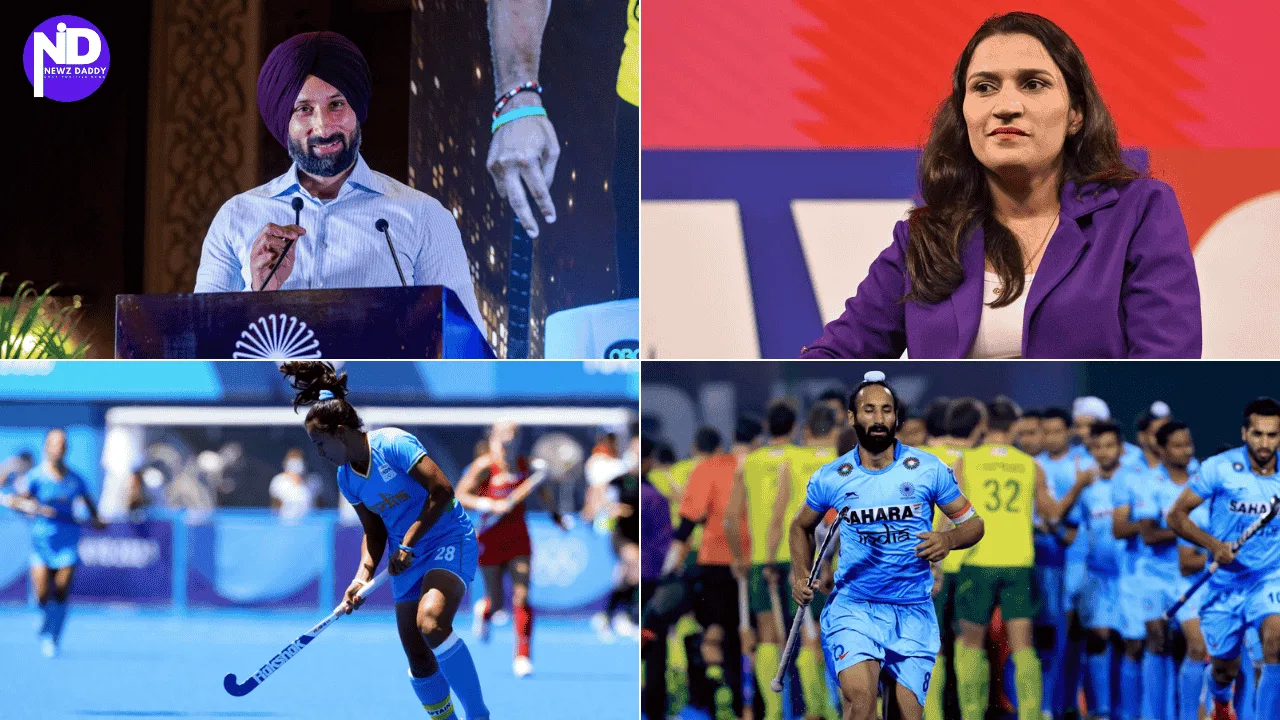
Rani Rampal has been named as coach for the Women’s team, while Sardar Singh and Rajnish Mishra will be in charge of the Men’s camp.
Both Rani Rampal and Sardar Singh bring huge experience. Rani has led India in major tournaments, including the Olympics, and is known for her calm approach. Sardar Singh, one of India’s finest midfielders, has years of leadership experience at the highest level. Their presence can help young players learn both skill and discipline early in their careers.
Commenting on the camp, Men’s Coach Sardar Singh said, “This camp is a fantastic initiative by Hockey India to nurture the next generation of talent. Our primary focus will be on strengthening their foundational basics while introducing them to the tactical demands of modern hockey. I see immense potential in this group. We may see several of these players representing India at the senior level for the next 10 to 15 years. The upcoming series against Australia will provide these young boys with a vital taste of international pressure.”
Modern hockey has become faster and more technical. Teams now use video analysis, fitness tracking, and detailed game plans. Teaching these aspects early gives young players a clear edge when they move to senior teams.
Women’s Coach Rani Rampal said, “Our focus in Bhopal will be on refining individual skills and team structure. The exposure matches against Australia are a fantastic opportunity for the girls to test themselves against a world-class side. It is the best way to prepare them for the demands of the Asia Cup and beyond. Moreover, these young athletes are the future of the sport, and we want to ensure they develop the temperament required to dominate at the highest level for years to come.”
In recent years, Indian women’s hockey has seen steady growth, with strong performances in global tournaments. Experts often say that building a strong bench of young players is key to maintaining this progress.
The 42-member Men’s squad features a strong contingent from Uttar Pradesh (7), followed by Madhya Pradesh (6), and Punjab (4). Additionally, there are 3 players each from Odisha, Jharkhand, and Dadra & Nagar Haveli and Daman & Diu (DDD), while 2 players each have been included in the camp from Bihar, Haryana, Chandigarh, and Tamil Nadu. Also, Maharashtra, Jammu & Kashmir, Himachal Pradesh, Telangana, Arunachal Pradesh, Karnataka, Chhattisgarh, and Rajasthan contribute 1 player each to the camp.
This widespread shows how hockey talent is growing across India. States like Odisha and Jharkhand have invested heavily in sports infrastructure, which is now showing results. Smaller regions also getting representation show better scouting and access to training.
The 42-member Women’s squad is led by 8 players from Jharkhand, while Madhya Pradesh, Punjab, and Odisha contribute 5 players each. Uttar Pradesh has 4 representatives, with Haryana, Bihar, and Mizoram contributing 3 players each. Manipur is represented by 2 players, followed by Maharashtra, Telangana, Jammu & Kashmir, and Tamil Nadu with 1 player each.
Jharkhand and Odisha continue to be strong centres for women’s hockey. Many players from these regions come from rural backgrounds, where sport is often seen as a path to better opportunities.
The detailed squad lists reflect the depth of talent being developed at the grassroots level. Programmes by the Sports Authority of India and Hockey India have improved training facilities, coaching quality, and competition exposure.
With the Asia Cup in Japan approaching, this camp will play a key role in shaping the next group of Indian hockey stars. For many of these young players, this is more than just a camp. It is a chance to take the first step towards wearing the senior India jersey.